
We use cookies to enhance your browsing experience, serve personalized content, and analyze our traffic. By clicking "Accept All" you accept this and consent that we share this information with third parties and that your data may be processed in the USA. For more information, please read our .
You can adjust your preferences at any time. If you deny, we will use only the essential cookies and unfortunately, you will not receive any personalized content.
The U.S. State Department has issued security alerts for Americans in Portugal and France in recent days, as protests over housing and living costs spread across Europe and turned violent in parts of Germany, France, and Italy.
The catch: these are alerts, not bans. France is still at Level 2, which means increased caution, but a nationwide strike on Thursday, November 5, could disrupt trains and public transport.
If you are heading to Europe soon, enroll in STEP and check embassy alerts before you fly.
The U.S. State Department shared a security alert on X on November 1 for Americans in Portugal, where housing protests have taken place in Lisbon and Porto.
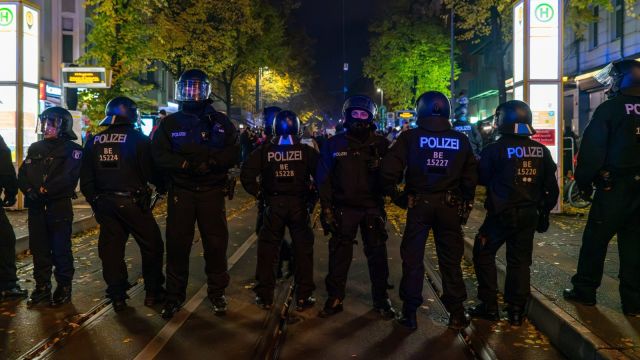
Protests took place in more than 30 German cities on October 31, and Newsweek reported that rioting in Frankfurt left more than 100 police officers injured and 54 people arrested.
French authorities estimated that about 320,000 people joined demonstrations nationwide on October 31, while organizers put the number at 500,000.
French unions called a nationwide strike for Thursday, November 5, and The Local France reported that the Gilets Jaunes movement is calling for more protests on November 6 and 7.
In Italy, AFP reported that protests were planned in eight cities on October 24, after boutiques in Milan were looted the weekend before.
France remains at Level 2: Exercise Increased Caution on the State Department's advisory page, which cites terrorism and civil unrest.
Unrest is hitting some cities harder than others, so here is where it has been reported and what is scheduled next.
The State Department uses a red Security Alert graphic for urgent notices to U.S. citizens abroad. Image source: U.S. Department of State.
Portugal (Security Alert Issued): Thousands marched through Lisbon on October 31 over the housing crisis. Several hundred protesters then set up a camp in Rossio Square, and police cleared the tents in the early hours of November 1, according to Newsweek. The U.S. Embassy said police had recently used crowd-control measures, including tear gas, in Lisbon and Porto, and advised Americans to avoid Rossio Square in Lisbon and Praça Dom João I in Porto.
Demonstrators gather at Rossio Square in Lisbon, one of the spots Americans were told to avoid.
Germany (Protests in Several Cities): Tens of thousands joined demonstrations in more than 30 cities, including Berlin, Cologne, and Munich, organized by the youth campaign group Gen Z regelt. In Frankfurt, rioters smashed shop windows and looted stores, and Frankfurt police said on X that more than 100 officers were injured. Masked protesters in Hamburg set fire to barricades near the end of a youth march.
Albania (Clashes Reported): Protesters clashed with police, and petrol bombs were thrown during unrest there.
France (Largest Crowds, Strike Today): Marches centered on living costs, purchasing power, and public services. Police reported 565 arrests nationwide, and tear gas and stun grenades were used in Lyon, Marseille, and Paris. A nationwide strike is planned for Thursday, November 5, affecting teachers, healthcare workers, government employees, and public transport, and the four largest railway unions have called for a joint national strike, according to the latest TravelGov alert.
French riot police hold shields in formation on a Paris street during a demonstration.
Italy (Protests in Rome, Milan, and Beyond): Violence and looting hit Italian cities in mid-October, and AFP reported that extra soldiers were sent to patrol Milan's city center. Truck blockades also caused fuel and food shortages in the south, though almost all have been lifted. DPA reported on October 30 that more than 200,000 people took to the streets across Italy.
A police van parked outside Milan's Duomo as people gather in the square.
The demonstrations are driven by frustration over rising living costs, housing shortages, and strained public services. In Germany, marchers also opposed a possible return to compulsory military service. Organizers of Gen Z regelt have said their protest is peaceful and have distanced themselves from the violence.
For visitors, the practical risk is disruption more than danger. Protest routes can change at short notice, and demonstrations can pop up outside authorized areas, according to the TravelGov alerts for Portugal and France. Level 2 advisories ask travelers to stay alert in crowded places, avoid demonstrations, and follow local news. They do not tell Americans to cancel trips.
Strikes add a second layer. Train, school, and public transport disruptions can slow a trip even in neighborhoods far from any march.
A few minutes of setup can save you real trouble if plans change on the ground.
Enroll in STEP so the nearest U.S. embassy can send you security updates and find you in an emergency.
Check the State Department's advisory for every country on your route, and reread it the week you leave.
Follow the local U.S. Embassy and @TravelGov on X, and keep a local news app on your phone.
Review your travel insurance for trip cancellation, medical, and evacuation coverage, and book refundable options where you can.
Insurance rules vary by policy, so read the exclusions for civil unrest and strikes before you buy. The State Department highly recommends buying insurance for international trips.
Most big-city trips can go ahead with some flexibility built in. For Portugal, the main gateways are Lisbon (LIS) and Porto (OPO). In Germany, Frankfurt (FRA), Hamburg (HAM), and Berlin (BER) are the busiest, Paris is served by Charles de Gaulle (CDG) and Orly (ORY), and in Italy most visitors fly into Rome (FCO) or Milan (MXP). Christmas market season starts in late November in Germany and France, so expect big crowds in city centers, which is one more reason to check the news each morning.
A few tips before you go:
Skip the squares and streets named in embassy alerts, and leave calmly if a crowd starts to gather.
Leave extra time for airport transfers and train connections, since marches, strikes, and closures can slow transit with little warning.
Keep your phone charged and share your location with someone you trust.
Stay alert for pickpockets in crowded areas, because the State Department's France advisory flags theft as a common problem.
Commuters walk past a Paris Metro entrance at République, where strike days can slow service.
This is a good moment to travel with a plan rather than a reason to cancel. Visitors with flexible itineraries, refundable bookings, and no need to be in a city center on a protest or strike day can likely carry on as normal. If you have tight connections in Frankfurt, Paris, or Milan, or no cancellation coverage, consider waiting a week or two or building in extra time.
The detail worth remembering is that protest routes can change at short notice, so the safest plan is to check conditions each morning and keep your plans loose.
The alerts reviewed here ask Americans for caution rather than cancellation, and most protests have stayed peaceful. Violence has hit specific cities, so check local conditions each day.
The U.S. Embassy alert says the strike is expected to affect public transport, schools, healthcare, and government services. Check your rail operator and airline for updates before you travel.
France remains at Level 2. The Portugal and France notices are security alerts, which are short-term messages separate from the four-level advisory system.
Nothing in the current alerts tells Americans to cancel. Check your airline's and insurer's policies, and decide based on where you will be and how flexible your plans are.
The Smart Traveler Enrollment Program is a free State Department service that sends U.S. travelers security alerts and helps embassies reach them in an emergency.