We use cookies to enhance your browsing experience, serve personalized content, and analyze our traffic. By clicking "Accept All" you accept this and consent that we share this information with third parties and that your data may be processed in the USA. For more information, please read our .
You can adjust your preferences at any time. If you deny, we will use only the essential cookies and unfortunately, you will not receive any personalized content.

Americans heading to Europe for the holidays are being urged to stay alert, especially at Christmas markets, festivals, and other crowded attractions. US embassies across Europe have issued a coordinated security warning about the potential for terrorist attacks and criminal activity at popular tourist spots, large gatherings, and transportation hubs. The November 16 alert doesn't point to any specific city, event, or date as a target. It also warns that transportation could be disrupted and encourages travelers to keep an eye on local news and follow guidance from authorities. If you're planning a trip, it's worth signing up for the free Smart Traveler Enrollment Program (STEP) so you can receive important embassy updates while you're away.
Here's what we know about the warning and a few simple ways to stay safe while enjoying Europe's holiday festivities.
U.S. embassies across Europe published a coordinated security alert on November 16, 2026, covering the UK and the rest of Europe.
The Europe-wide security alert warns that terrorists, including lone actors, may attack with little or no warning at tourist locations such as markets, transportation hubs, shopping malls, and places of worship.
The alert doesn't change country-level travel advisories, and Germany, for example, remains at Level 2, Exercise Increased Caution.
Hoax bomb threats disrupted European flights in early November 2026, with Eurocontrol aware of threats against 14 flights on November 5 and seven on November 3.
The embassies ask all U.S. citizens abroad to enroll in the Smart Traveler Enrollment Program, known as STEP, to receive security updates for their destinations.
The U.S. Embassy in Germany's notice, one of the matching alerts posted across Europe, opens with this red Security Alert banner
Image source: U.S. Embassy in Germany
The message is consistent across missions: stay alert, keep a low profile, and treat crowds as the main risk factor. The alert asks Americans to practice sound personal security and situational awareness, to use extra vigilance at holiday festivals and events, and to follow the instructions of police and emergency response officials.
Large gatherings and public events can be attractive targets for terrorist groups and criminals. The embassy text lists markets, transportation hubs, shopping malls, places of worship, and other public areas, and it says visitors to congested tourist areas should pay particular attention to their surroundings.
The alert's own wording names markets, transportation hubs, shopping malls, and places of worship among the public spaces where terrorists may attack with little or no warning
Image source: Screenshot of the Europewide U.S. embassy security alert text issued November 16, 2026
Recommended precautions include avoiding demonstrations and areas of heavy police activity, keeping a low profile, securing valuables, monitoring local news, and checking with airlines for schedule changes.
The alert doesn't point to a specific threat. A State Department spokesperson described the notice as general safety and security information for the holiday season, and it's separate from the department's standing Worldwide Caution.
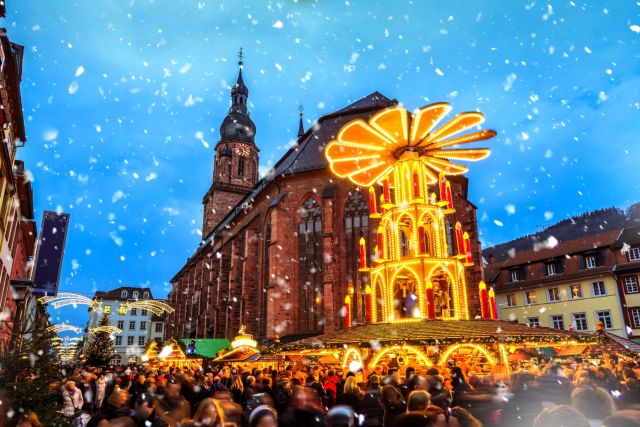
Browsing market stalls with a hot drink is exactly the scene the alert covers, and its advice is to enjoy it while staying aware of your surroundings
The alert ties its warning about disrupted travel to two recent developments. It says hoax bomb threats targeted civil aviation in numerous European countries in November, and that strikes and demonstrations have occurred more frequently in recent months.
Flights in the first week of November were disrupted across London, Copenhagen, Dublin, and Helsinki. Eurocontrol was aware of threats against 14 flights on November 5, about 0.05 percent of the roughly 26,300 flights across the network that day. Authorities had not attributed the threats to any group or state actor, and the affected flights landed safely with nothing suspicious found.
Transport strikes have already hit travelers this month, including a nationwide strike in France on November 5 and a Spanish general strike that unions called for November 11. The embassy text doesn't list specific upcoming dates, so check your airline, rail operator, and local news close to departure.
Departure boards at big rail hubs such as London Waterloo are where strikes, cancellations, and delays show up first
The alert is a request for awareness, and a few steps before and during your trip put it into practice.
Enroll in STEP for every country on your itinerary so the nearest U.S. embassy can send you alerts.
Check each destination's page on travel.state.gov for its current advisory level, since this alert does not change those levels.
Turn on flight alerts in your airline's app and check your flight status before leaving for the airport.
At markets, festivals, and transit hubs, keep valuables secured, note the exits, and follow instructions from police and emergency officials.
Booking notes: The alert asks for vigilance and doesn't tell Americans to cancel trips. Flexible fares and travel insurance can help with strikes and diversions, so confirm what your policy covers before you buy.
The places the alert names are also the places most holiday itineraries include, so planning is mostly about timing. If your route runs through a large hub such as London Heathrow (LHR), Paris Charles de Gaulle (CDG), Frankfurt (FRA), Amsterdam Schiphol (AMS), or Madrid (MAD), leave generous time between connections.
When a strike hits flights, trains can be a workable backup, and when it hits rail, the reverse is often true, so keep both options in mind.
Big-name markets like Dresden's Striezelmarkt draw heavy crowds, so an earlier visit is the easiest way to keep some breathing room
Save the contact details for the nearest U.S. embassy in your phone before you fly.
Pick a meeting point with your group in case you're separated in a crowd.
Visit popular markets earlier in the day or on weekdays, when crowds tend to be lighter.
Carry a backup payment card and a charged phone or power bank in your day bag.
A lit boulevard on a December evening is still the picture most travelers have in mind for a European trip, and the alert asks them to enjoy it with their eyes open
If you already have a trip to Europe planned, there's no need to change your plans based on this warning alone. A few simple precautions can help you travel with peace of mind. Sign up for STEP to receive embassy updates, keep an eye on flight schedules, and stay alert in crowded places. If you're visiting Christmas markets, consider going during quieter hours or exploring smaller markets away from the biggest tourist crowds.
The embassies aren't advising Americans to cancel their trips. Their message is simply to stay informed, be aware of your surroundings, and follow instructions from local police and emergency officials. A little extra awareness can go a long way, especially during the busy holiday travel season.
Yes, Americans can still travel to Europe, but officials recommend extra caution at crowded events and tourist attractions. The November 16 alert does not advise travelers to cancel trips or announce changes to country-specific travel advisory levels.
US embassies across Europe issued coordinated security alerts on November 16, 2026, including missions in London, Madrid, Lisbon, Dublin, Berlin, and Sofia. The warnings cover holiday gatherings, tourist attractions, and transportation hubs.
No. The alert does not identify a specific terrorist plot, targeted city, or planned attack date. It warns that terrorist groups and criminals could target crowded public places with little or no warning.
Christmas markets remain open, and the US government has not advised Americans to avoid them. Travelers should stay aware of their surroundings, follow local security instructions, and consider visiting during less crowded hours.
The Smart Traveler Enrollment Program (STEP) is a free US State Department service that provides embassy security alerts and travel updates for your destinations. Americans can enroll at step.state.gov.
Yes. Hoax bomb threats have caused flight diversions, emergency landings, and delays across Europe in November 2026. Travelers should monitor airline notifications and check flight status before heading to the airport.
Stay alert in crowded areas, monitor local news, and follow instructions from police and emergency officials. Keep your phone charged, check transportation updates, and make sure you know how to contact local emergency services.