We use cookies to enhance your browsing experience, serve personalized content, and analyze our traffic. By clicking "Accept All" you accept this and consent that we share this information with third parties and that your data may be processed in the USA. For more information, please read our .
You can adjust your preferences at any time. If you deny, we will use only the essential cookies and unfortunately, you will not receive any personalized content.

On June 15, 2026, this tiny former Portuguese colony of just 500,000 people walked into Mercedes-Benz Stadium in Atlanta and held European champions Spain to a 0-0 draw in their first-ever World Cup appearance. Their 40-year-old goalkeeper, Vozinha, made seven saves and became an overnight legend. But Cape Verde has always been worth knowing. The World Cup just finally gave the world a reason to look it up.
10 volcanic islands make up Cape Verde, located in the North Atlantic about 350 miles off West Africa.
Portuguese is the official language, while Cape Verdean Creole, known as Kriolu, is spoken by nearly everyone.
Praia is the capital, located on the island of Santiago.
Around 500,000 people live there, making Cape Verde one of the smallest nations ever to qualify for a World Cup.
More Cape Verdeans live abroad, with a major diaspora community in Boston and across New England.
Warm, sunny weather lasts year-round, with average temperatures usually in the low-to-mid 80s°F.
The Cape Verdean escudo is the currency, though euros are sometimes accepted in tourist areas.
Cape Verde is in Group H, alongside Spain, Uruguay, and Saudi Arabia.
Cape Verde is a Portuguese-speaking island nation in the North Atlantic, about 350 miles west of Senegal on the coast of West Africa. Portuguese sailors arrived in the islands in the 1460s, and Portugal colonized them for more than five centuries before Cape Verde gained independence in 1975. For generations, the islands sat at the crossroads of Europe, Africa, and the Americas, serving as a key stop along Atlantic trade routes. That history shaped almost everything about the country: the language, the food, the music, and a Creole culture that feels entirely its own.
There are ten islands in total, split into two main groups. The Barlavento islands sit to the north, while the Sotavento islands sit to the south, and each one has its own personality. Sal and Boa Vista are the beachy, resort-friendly islands. Santo Antão is made for hikers. São Vicente is the cultural heartbeat, especially for music. Santiago carries much of the country’s history, including Praia, the capital. You could spend two weeks island-hopping here and still feel like you’d only seen the opening chapter.
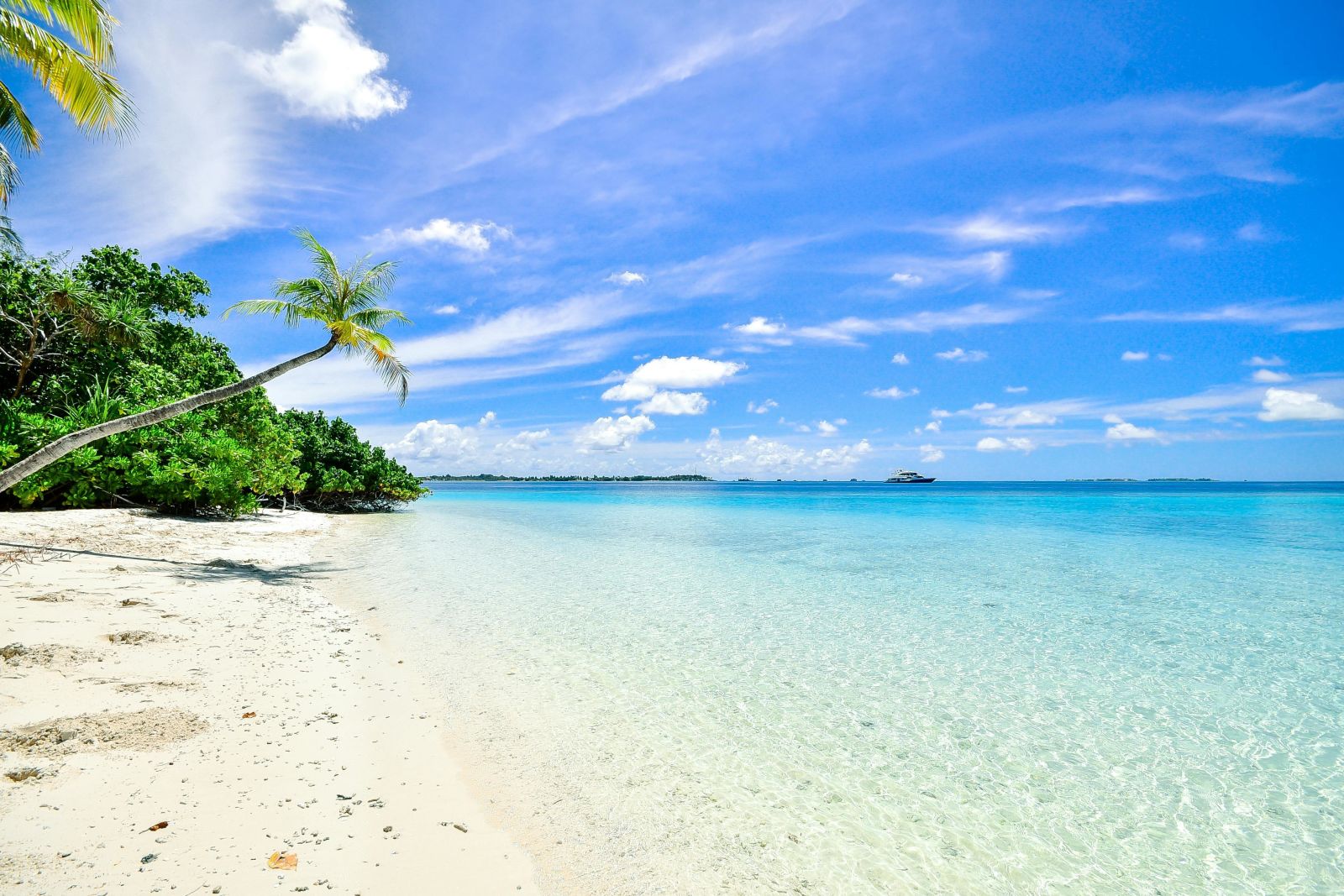
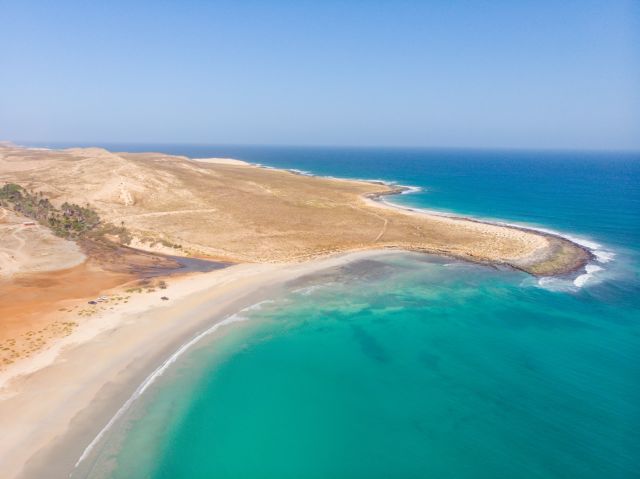
Sal's Santa Maria Beach is a long, wide stretch of white sand with warm, calm water and near-constant sunshine. Boa Vista goes even further, with sweeping dunes that push right up to the shoreline in a way that feels more like the Sahara than anything you'd expect from a small Atlantic island. Santa Monica Beach on Boa Vista regularly appears on lists of Africa's best, and it earns that ranking without any argument.
The water temperature stays comfortable year-round, and the consistent trade winds make Sal one of the top kitesurfing destinations in the world. If that's not your thing, the same conditions make for great sailing and the kind of slow beach days where you genuinely lose track of time.
Near Santa Maria, boat trips run out to Shark Bay, where nurse sharks gather in shallow water and you can swim right alongside them. They're harmless, and yes, it's as surreal and wonderful as it sounds.
Centuries at the meeting point of continents will do that to a place. Cape Verde’s culture blends West African and Portuguese traditions, but it isn’t simply one plus the other. It became something distinct, shaped by migration, colonial history, island life, and the Atlantic itself.
Music is the best way in. Morna is the soul of the islands, a melancholy and deeply beautiful genre that sounds like longing turned into song. Cesária Évora, the barefoot diva from São Vicente, carried morna to the world stage and won a Grammy in 2004. Coladeira is morna’s livelier cousin, while batuku, rooted in Santiago, has long carried the force of resistance and community. Spend real time here and you’ll hear those rhythms drifting from open doorways, café radios, beach bars, and late-night gatherings.
The food is just as rooted. Cachupa is the national dish, a slow-cooked stew of corn, beans, vegetables, and whatever protein is available, often fish, pork, or sausage. It tastes like the kind of meal that’s been perfected over generations because it has. Grogue, the local sugarcane rum, is also part of the culture here. It’s strong, traditional, and taken seriously by the people who make it, so visitors should approach it with the same respect.
Santo Antão is for travelers who came for more than a beach chair, and it rewards them generously. The island is volcanic, dramatic, and wildly green, with deep valleys carved between ridges and trails that wind through terraced farmland, mountain villages, and fishing communities that still feel genuinely remote.
The famous coastal hike from Ponta do Sol to Cruzinha traces the cliffs above the Atlantic, passing through Fontainhas, a village so scenic that National Geographic once ranked it among the world’s best villages for views. That’s not the kind of claim you have to take on faith.
You’ll see the cliffs, the stacked houses, the green slopes, and the ocean dropping away below you, and you’ll get it immediately. Just know this isn’t a flip-flops-and-phone-camera kind of hike. Bring proper boots, water, and a little respect for the terrain. Santo Antão is stunning, but it’s not an Instagram stroll.
Cape Verde isn’t an obvious American vacation spot yet, and that’s honestly part of its appeal. There are no nonstop flights from the US, so most travelers connect through Europe, usually Lisbon, with Sal and Santiago serving as the main entry points. From the East Coast, you’re typically looking at a long travel day with at least one connection. It’s a commitment, but not an outrageous one for a destination this good.
The islands use the Cape Verdean escudo, and while euros are sometimes accepted in tourist areas, local currency is useful once you get beyond the resort strip. English is common in tourist-facing settings on Sal and Boa Vista, but a few words of Portuguese will go a long way elsewhere. Cape Verde is also one of Africa’s more politically stable countries and is widely considered safe for visitors, including families and solo travelers who use normal travel judgment.
The best time to visit is generally November through June, when the weather is warm, sunny, and relatively dry. July through October can bring more humidity and occasional storms, though temperatures stay warm year-round.
Cape Verde just had its biggest moment on the world stage, but the islands were already worth knowing. Come for the World Cup curiosity, then stay for the beaches, volcanic hikes, morna, cachupa, and warm Atlantic culture. It takes a little more effort to reach from the US, which is part of why it still feels under the radar. Something tells us Cape Verde’s moment won’t end here.
Cape Verde is warm, welcoming, and genuinely beautiful. Think white-sand beaches, dramatic volcanic landscapes, and a rich Creole culture shaped by centuries of Portuguese and West African influence. It's relaxed but never boring, with world-class beaches on Sal and Boa Vista, serious hiking on Santo Antão, and a music and food scene that reflects a history unlike anywhere else.
Cape Verde is an archipelago of 10 islands in the North Atlantic Ocean, roughly 350 miles off the coast of Senegal in West Africa. It sits at the crossroads of Europe, Africa, and the Americas, which shaped everything about its culture and history.
The official language is Portuguese. Most people also speak Cape Verdean Creole, known as Kriolu, which is the everyday language of the islands. English is widely spoken in tourist areas on Sal and Boa Vista.
There are no direct flights from the US. Most travelers connect through Lisbon, London, or Amsterdam. The main airports are on Sal (SID) and Santiago (RAI). From the US East Coast, total travel time is typically 12 to 14 hours with one connection.
Cape Verde is known for its white-sand beaches, year-round sunshine, world-class kitesurfing, volcanic hiking trails, vibrant Creole culture, and morna music. It made its FIFA World Cup debut in 2026, drawing 0-0 with European champions Spain in one of the tournament's biggest surprises.
Vozinha is Cape Verde's goalkeeper and the hero of their stunning 0-0 World Cup draw against Spain on June 15, 2026. He made seven saves against the European champions at age 40, just two weeks after his birthday, and became a global figure overnight.
Yes. Cape Verde consistently ranks among the most stable and democratic countries in Africa and is considered safe for solo travelers, couples, and families alike.
It depends on what you're looking for. Sal and Boa Vista are best for beaches and watersports. Santo Antão is the top hiking destination. São Vicente, home to the city of Mindelo, is the cultural heart of the islands. Santiago has the deepest history, including the UNESCO-listed Cidade Velha.