We use cookies to enhance your browsing experience, serve personalized content, and analyze our traffic. By clicking "Accept All" you accept this and consent that we share this information with third parties and that your data may be processed in the USA. For more information, please read our .
You can adjust your preferences at any time. If you deny, we will use only the essential cookies and unfortunately, you will not receive any personalized content.

A wave of bomb threats has disrupted at least 27 passenger flights across Europe today, Thursday, November 5, 2026, according to Reuters. Flights operated by Aer Lingus, Ryanair, Finnair, Wizz Air, and other airlines have been diverted, searched, or escorted by military fighter jets. The incidents follow similar threats earlier this week, but there's some reassuring news for travelers: all affected aircraft have landed safely, and authorities have not reported finding any explosives. Investigators are now trying to determine who's responsible and whether the threats are connected.
At least 27 European flights received bomb threats on November 5, according to Reuters, with diversions, emergency inspections, and military escorts reported.
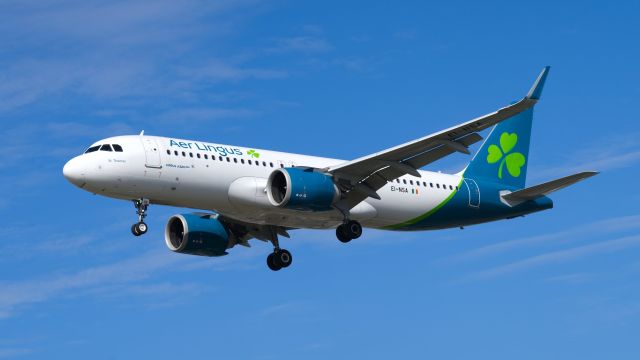
Aer Lingus flight EI402 was diverted to France while traveling from Dublin to Rome, landing safely at a military air base in Normandy
Three Ryanair flights bound for Bulgaria received threats and military escorts, with one diverted from Sofia to Plovdiv.
Flights operated by Finnair, Wizz Air, LOT, and Iberia were also affected, alongside aircraft operated by several other European airlines
Authorities have found no explosives on the affected aircraft inspected so far, and no injuries have been reported.
Similar bomb threats disrupted European flights earlier this week, including incidents on November 2 and November 3
Authorities have not publicly identified those responsible, and investigators have not established whether all the incidents are connected
Thursday's incidents affected flights traveling between countries across Europe, including Ireland, France, Italy, Finland, Bulgaria, Poland, Austria, Belgium, Romania, Spain, and the Czech Republic. Some aircraft were diverted to alternate airports, while others continued to their destinations before undergoing additional security inspections. According to Reuters, at least 27 flights were affected by the latest wave of threats.
One of the most unusual incidents involved Aer Lingus flight EI402, which was traveling from Dublin to Rome when authorities ordered it to divert to Évreux military air base in northern France. French fighter jets escorted the aircraft, and all 151 passengers and six crew members were safely evacuated while military bomb-disposal teams examined the plane. Aer Lingus confirmed the diversion was a security precaution and said it would work to get passengers to their intended destination.
Meanwhile, Italian Air Force fighter jets escorted Finnair flight AY1761 from Helsinki to Rome, where the aircraft landed safely and was inspected. Three Ryanair flights bound for Sofia, Bulgaria, were also targeted. Flights from Copenhagen and Madrid landed in Sofia, while the service from London Stansted was diverted to Plovdiv. Bulgarian military aircraft escorted all three planes, and subsequent inspections found no explosives.
Passengers wait inside a busy Italian airport terminal in this file photo, as flights bound for Rome were among those targeted by bomb threats on Nov. 5.
The following flights and routes were identified by airlines, airport authorities, or major news agencies in connection with the November 5 threats. This is a selection of confirmed reports, not a complete list of all 27 affected flights.
Several of the flights named by airlines and news agencies on Nov. 5, with routes and reported outcomes
Other reported flights include two Aegean Airlines services, from Thessaloniki to Milan and from Athens to Vienna, which landed and were found to be unfounded threats. A Wizz Air flight from Milan to Bucharest landed safely and was inspected, while a LOT Polish Airlines flight from Warsaw to Paris was stopped before takeoff and its passengers were transferred.
Additional threats affected flights arriving in Prague, where Czech authorities conducted inspections of four aircraft. Reuters also reported affected EasyJet flights arriving from the United Kingdom and an Air Serbia flight traveling to Bucharest. Spanish authorities reported threats involving Air Europa and Iberia flights, while police in Copenhagen inspected two aircraft.
Because this is a developing story, airlines and authorities may release additional flight numbers or update the outcomes of individual inspections.
Investigators are examining whether the incidents form part of a coordinated campaign, but authorities have not established who is responsible. The Associated Press reported that some threatening emails contained language associated with groups describing themselves as anti-feminist, while Italian reports identified messages signed with a name resembling an extremist organization previously banned in Russia. Those details have not established the identity of the sender or proven that a particular group carried out the threats.
The European Commission is coordinating with national authorities as investigations continue. EU Transport Commissioner Apostolos Tzitzikostas cautioned that it was too early to establish whether the incidents were linked and confirmed that an aviation-security information-sharing mechanism had been activated. Although the events have raised questions about potential hybrid threats, there is currently no verified attribution connecting the bomb warnings to a foreign government.
Thursday's incidents follow a series of similar alerts earlier in November. On Monday, November 2, a Wizz Air flight from London Luton to Sofia was diverted to Budapest following a reported bomb threat. Hungarian military aircraft were deployed, and investigators subsequently found no explosives.
More threats followed on Tuesday, November 3, when flights operated by Ryanair, LOT Polish Airlines, SAS, and Wizz Air were affected. A LOT flight from London to Warsaw diverted to Warsaw Modlin Airport, where operations were temporarily suspended, while Ryanair flights arriving in Rome were searched following security alerts. Reuters reported that at least seven flights and a cruise ship received threats that day, demonstrating that the disruption has extended beyond Thursday's incidents.
For travelers with upcoming flights in Europe, the most important thing to understand is that these incidents have involved individual aircraft rather than a general shutdown of European airports. While some flights have been diverted or delayed during security procedures, other airport operations have continued. Rome Fiumicino's operator, for example, told Reuters that its airport services had not been disrupted by the alerts.
There's no indication that Americans need to cancel European travel plans because of these threats. However, passengers traveling on affected routes should follow airline updates, particularly if they have tight connections or onward international flights.
A few tips to help with planning:
Check your flight status directly with your airline before leaving for the airport, especially if you're departing from or connecting through an affected city.
Allow extra time for connections if your journey involves multiple airlines or a separately booked onward flight.
Watch for airline notifications about delays, diversions, rebooking options, or changes to your departure gate.
Keep essential items in your carry-on, including medications, travel documents, and anything you may need during an unexpected delay.
Save your receipts if a disruption requires you to purchase meals, transportation, or accommodation.
Check your passenger rights if your flight is substantially delayed or canceled. Under EU261, care and rebooking or refund rights may apply even when extraordinary security circumstances remove eligibility for financial compensation.
For travelers covered by European passenger-rights regulations, the European Commission's official air passenger rights guidance explains the protections available during cancellations and long delays.
Checking your airline's app before heading to the airport is the simplest way to stay ahead of disruptions.
The latest wave of bomb threats has caused substantial disruption across European aviation, with military escorts, emergency diversions, and security inspections affecting passengers in numerous countries. Thankfully, the aircraft involved have landed safely, and authorities have not reported finding explosives during their searches.
Investigations are continuing, and the number of affected flights may change as airlines and authorities release additional information. For now, travelers should remain attentive to airline notifications without assuming that European airports are experiencing widespread closures or that their particular flight has been affected.
Multiple airlines received bomb threats on November 5, prompting authorities to divert aircraft, order security inspections, and deploy military escorts. Investigators are examining whether the threats are connected.
Reuters reported that at least 27 flights were targeted on November 5, 2026. Additional flights were affected earlier in the week.
No explosives have been reported in the searches conducted so far. Authorities have described the incidents as hoaxes, although investigations are continuing.
Affected airlines include Aer Lingus, Ryanair, Finnair, Wizz Air, LOT Polish Airlines, Aegean Airlines, Iberia, Air Europa, EasyJet, and Air Serbia.
There has been no Europe-wide airport shutdown. Certain airports have temporarily restricted operations or conducted additional inspections, but most flights have continued operating.
The confirmed incidents have primarily involved flights operating within Europe. There is no evidence from the reviewed reports of a general disruption to transatlantic flights, although individual connections could be affected.
Authorities have not publicly identified those responsible. Investigators are examining the threatening messages and possible connections between incidents.
Passengers may qualify for refunds, rerouting, and assistance depending on their itinerary and applicable regulations. Financial compensation under EU261 may not apply when delays are caused by extraordinary security circumstances that could not reasonably have been avoided.