We use cookies to enhance your browsing experience, serve personalized content, and analyze our traffic. By clicking "Accept All" you accept this and consent that we share this information with third parties and that your data may be processed in the USA. For more information, please read our .
You can adjust your preferences at any time. If you deny, we will use only the essential cookies and unfortunately, you will not receive any personalized content.

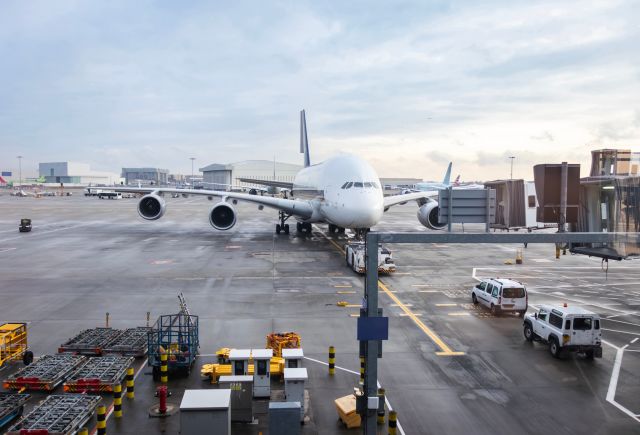
Travelers across the UK are facing a second day of serious flight disruption after a major air traffic control failure grounded planes and stranded passengers. Current reports put the total at roughly 1,900 to 2,000 canceled flights across Tuesday and Wednesday, with hundreds of thousands of passengers affected, and London Heathrow has been hit especially hard. The airport says flights are operating again, but cancellations and delays are continuing as airlines work to get aircraft and crews back where they belong. For American travelers, this isn't just a UK problem — several flights between the US and London have also been canceled, so anyone flying to, from, or through Heathrow should check their flight before heading to the airport.
More than 1,900 UK flights were canceled or delayed between September 8 and September 9, 2026, according to flight-tracking data shared by AirNav Radar.
A software failure in NATS's flight-processing system triggered the meltdown, and officials have ruled out a cyberattack.
Heathrow took the biggest hit, logging 362 cancellations on Tuesday and 253 more on Wednesday, plus hundreds of delays.
Hotel rooms near London reportedly spiked, with one viral post showing a two-star Best Western pricing a room at £10,131 (about $13,600).
US carriers including American, Delta and United route through Heathrow and Gatwick, so transatlantic connections and layovers took a hit too.
Cash compensation is unlikely because ATC failures count as "extraordinary circumstances" under UK rules, though airlines still owe meals, hotels and rebooking.
This is the third major NATS failure in three years, after a 2023 meltdown that cost airlines more than £100 million (more than $134 million).
No US airports reported ground stops, so domestic US flights weren't directly grounded by this outage.
The problems started just before 2 p.m. local time on Tuesday, September 8, when NATS, the company that manages most of the UK’s air traffic control, reported a fault in its flight-processing system.
Controllers responded by slowing departures while the issue was investigated. Heathrow and Gatwick were hit first, before restrictions spread to around 15 airports, including Manchester, Birmingham, Bristol, Edinburgh, and Aberdeen.
NATS said a fix was in place by Tuesday evening, and chief executive Martin Rolfe later told the BBC that a cyberattack had been ruled out. But fixing the system didn’t instantly fix the schedule. By then, planes and crews were already out of position, which meant cancellations continued into Wednesday.
It’s also not the first time NATS has had a major system failure. A similar problem in August 2023 disrupted around 700,000 passengers, while another issue caused widespread delays in July 2025. The latest outage is once again raising questions about how resilient the UK’s air traffic control systems really are.
The scenes at UK airports this week have been brutal: passengers sleeping on terminal floors, luggage piling up, and departure boards turning red as cancellations mounted.
Traveler Nick Marr said he spent eight hours stuck on a plane on the tarmac and described Heathrow as “mayhem.” Finding somewhere to sleep wasn’t much easier.
Journalist Pádraig Belton shared a screenshot showing a two-star Best Western in Reading, more than 16 miles from Heathrow, listing a room for £10,131, or about $13,600, for one night. Other stranded travelers said they called dozens of hotels even farther away and still couldn’t find a room.
It’s a familiar problem when a major airport grinds to a halt: thousands of stranded passengers suddenly start searching for the same limited number of nearby hotel rooms, and prices can climb fast.
Source: Screenshot via @PadraigBelton on X
Here's the reassuring part first: no US airport reported a ground stop or direct impact from this outage. So if you're flying purely domestically within the US this week, this isn't the reason for any delay you might be seeing.
The bigger concern is if you're flying to, from, or through the UK. American, Delta, United, and British Airways all operate multiple daily flights between the US and Heathrow or Gatwick, and both airports were caught up in the disruption. British Airways alone canceled or diverted around 100 flights, while long-haul traffic bound for Heathrow was affected too, including at least one Singapore Airlines flight that diverted to Frankfurt instead of landing as scheduled.
That means even if your transatlantic flight wasn't canceled outright, it could still have been delayed, rerouted, or affected by an aircraft or crew caught up in the backlog.
And the knock-on effects can linger. Even flights that technically operated may still have seen tighter connections, last-minute gate changes, or delayed baggage afterward. If you've got a UK connection coming up this week, it's worth checking your specific flight status rather than assuming everything is back to normal.
Because this was ruled a technical failure outside any airline's control, it's classified as an "extraordinary circumstance," which means the standard UK261 cash compensation of £220 to £520 ($295 to $697) almost certainly doesn't apply here. That said, airlines still owe you a duty of care. Here's what you're entitled to, and what to do about it:
A refund or rebooking onto the next available flight, your choice
Meals and hotel accommodation if you're stuck overnight
No guaranteed cash compensation, since ATC failures count as "extraordinary circumstances"
Call your airline directly before booking anything yourself, since coverage varies by carrier
Keep every receipt, in case you're reimbursed after the fact
There isn't a firm end time yet, but the air traffic control system itself is back online. What travelers are dealing with now is the enormous logistical hangover left behind.
Heathrow says operations are recovering, while airlines continue moving planes and crews back into position. That should gradually improve the situation, but with nearly 2,000 cancellations across the UK in two days, travelers flying Wednesday and Thursday should still expect the possibility of last-minute schedule changes.
For Americans headed to London this week, the best advice is simple: don't cancel your trip preemptively, but don't head to the airport without checking your flight either. The UK isn't shut down, and many transatlantic services are operating normally again. Right now, though, having a little flexibility and a well-packed carry-on is probably a very good idea.
A technical fault in NATS's flight-processing system, the software controllers use to manage flight plans, forced airports across the UK to restrict departures starting September 8, 2026, leading to more than 1,900 canceled or delayed flights.
No. NATS chief executive Martin Rolfe told the BBC that a cyberattack has been ruled out, and the organization is treating it as an internal software failure.
Only if your flight departs from, arrives at, or connects through a UK airport, especially Heathrow or Gatwick. Purely domestic US flights weren't affected, since no US airports reported any ground stops tied to this outage.
Probably not. Air traffic control failures are classified as "extraordinary circumstances" under UK261 rules, which exempts airlines from the usual £220 to £520 ($295 to $697) compensation payments, though you're still owed a refund or rebooking plus care while you wait.
Contact your airline directly before heading to the airport, ask about rebooking or refund options, and keep receipts for any meals or hotels you pay for out of pocket in case you're later reimbursed.
Airlines have warned that knock-on disruption could continue for several days past the initial fault, since aircraft and crews were left out of position and hub airports like Heathrow operate close to full capacity.
Yes. A similar NATS flight-processing failure in August 2023 disrupted about 700,000 passengers and cost airlines more than £100 million (more than $134 million), and a separate technical issue caused hours of delays in July 2025.
Not necessarily. The immediate fault has been resolved, but if you have low tolerance for schedule risk, building extra connection time into any UK itinerary this fall is a reasonable precaution given the recent pattern of failures.