We use cookies to enhance your browsing experience, serve personalized content, and analyze our traffic. By clicking "Accept All" you accept this and consent that we share this information with third parties and that your data may be processed in the USA. For more information, please read our .
You can adjust your preferences at any time. If you deny, we will use only the essential cookies and unfortunately, you will not receive any personalized content.
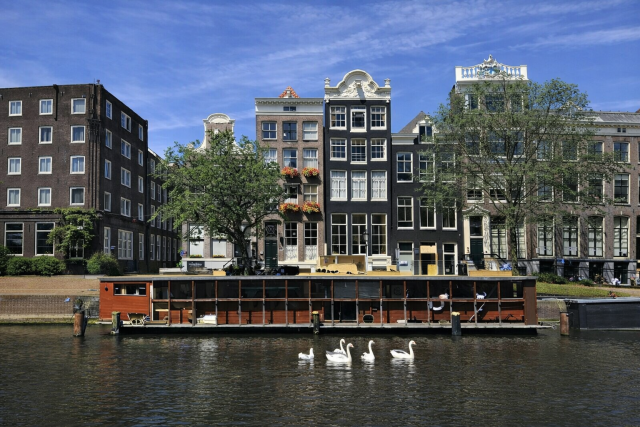
Amsterdam has museums, canals, and world-class coffee. It also has De Poezenboot (The Catboat), a floating cat sanctuary that has been caring for stray and surrendered cats since the 1960s. Run by volunteers and supported by donations, this houseboat-turned-haven offers lifelong care to cats who need it most, and quietly steals the hearts of just about everyone who wanders past. It is one of Amsterdam’s most unexpected places to pause, smile, and do a bit of good.
De Poezenboot is exactly what it sounds like: a nonprofit cat shelter located on a houseboat in Amsterdam’s historic canal ring. Founded in 1966, it was created as a practical solution to a growing number of stray cats and too little space on land. Today, it remains the only floating cat sanctuary of its kind in the world.
The cats who live here are not temporary guests. Many are feral, elderly, or have medical or behavioral needs that make traditional adoption difficult. The Catboat provides them with permanent care, safety, and daily attention, all while floating quietly along the Singel canal.
Unlike many animal shelters, De Poezenboot receives no government funding. Everything from food and veterinary care to vaccinations, neutering, and microchipping is paid for through donations and financial adoption programs.
The Catboat also plays an important role in Amsterdam’s broader animal welfare efforts. Volunteers work closely with veterinarians to rescue, treat, and stabilize cats, and to reduce future stray populations through spaying and neutering initiatives. In some cases, the Catboat steps in when owners cannot afford veterinary care, preventing even more cats from ending up on the streets.
De Poezenboot is open to visitors, but it is not a tourist attraction or petting zoo. Visiting hours are limited, and only a small number of people are allowed onboard at a time to keep stress low for the cats.
Visitors are asked to move calmly, follow staff instructions, and remember that the cats come first. Some cats are social, others prefer their space. Watching them nap in sunlit corners or wander the deck is part of the experience.
Entry is free, but donations are strongly encouraged and help keep the sanctuary afloat in the most literal sense.
There are several meaningful ways to help support De Poezenboot:
Donate directly to help cover daily care and veterinary costs
Financially adopt a cat, supporting a specific resident long-term
Share their story, helping more people discover and support the sanctuary
Follow and engage on social media to increase visibility
Even small contributions make a real difference for an organization that relies entirely on public support.
In a city full of must-see sights, De Poezenboot stands out for its kindness. It’s not flashy or crowded, and it was never designed to be an attraction. It exists because someone once saw a growing problem and chose care, responsibility, and creativity over convenience.
Whether you are a cat lover, an animal welfare supporter, or simply someone who enjoys discovering places with heart, the Catboat offers a reminder that travel is not just about what you see, but what you choose to care about along the way.
What is De Poezenboot?
A floating cat sanctuary in Amsterdam that provides lifelong care for stray and surrendered cats.
Where is the Catboat located?
On the Singel canal in Amsterdam’s historic city center.
When was De Poezenboot founded?
In 1966.
Is De Poezenboot free to visit?
Yes, entry is free, but donations are encouraged.
Can you adopt a cat from the Catboat?
Some cats can be adopted, but many are permanent residents. Appointments are required.
How many cats live there?
The number varies, but dozens of cats live onboard at any given time.
How is the Catboat funded?
Entirely through donations, financial adoptions, and volunteer support.
Is De Poezenboot suitable for children?
Yes, as long as children behave calmly and respectfully around the cats.