We use cookies to enhance your browsing experience, serve personalized content, and analyze our traffic. By clicking "Accept All" you accept this and consent that we share this information with third parties and that your data may be processed in the USA. For more information, please read our .
You can adjust your preferences at any time. If you deny, we will use only the essential cookies and unfortunately, you will not receive any personalized content.

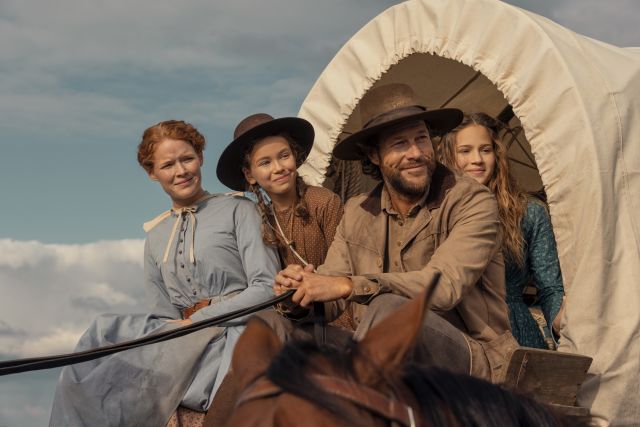
The Netflix reboot of Little House on the Prairie premiered on July 9, 2026, and if the landscape looked authentically relentless, that's because the production earned it the hard way. The eight-episode first season was filmed entirely in Manitoba, Canada, with principal photography running from June 10 to October 2025. Showrunner Rebecca Sonnenshine chose Manitoba specifically for its tall grasses and sweeping, untouched prairie look that matched what the books describe. What followed was four months of floods, tornadoes, lightning, extreme winds, ticks, and bugs. Here's where the show was actually made, and what's worth visiting if you want to follow it there.
The entire series was filmed in Manitoba, Canada, despite being set in Independence, Kansas — not a single scene was shot in the United States
Cooks Creek, a small rural community 30 kilometres northeast of Winnipeg, served as the primary filming hub, where the Ingalls homestead and the town of Independence were constructed from the ground up
The Ingalls log cabin weighed 90,000 pounds and was built without a single nail, requiring 175 art department workers under production designer Jonah Markowitz
The production built 29 full-standing buildings to create the frontier town of Independence on the Cooks Creek prairie
Fort Gibraltar in Winnipeg's St. Boniface neighborhood was used for outdoor winter sequences and historical frontier scenes
FortWhyte Alive, a large nature reserve on the outskirts of Winnipeg, provided untouched grassland and prairie landscape for broader outdoor scenes
Season 2 is already in production in Manitoba, with the story moving to Walnut Grove, Minnesota but keeping the same Canadian filming base
The new Netflix adaptation of Little House on the Prairie didn't travel to Kansas to recreate the story. Instead, production settled in Manitoba, where the land around Winnipeg offered the tall grass, waterways, forests, and enormous open skies the filmmakers needed. The landscape does much of the work itself, which is probably why the prairie feels less like a background and more like another character quietly watching the Ingalls family make a series of questionable real estate decisions.
Filming came with its own frontier experience. For months, the cast and crew dealt with flooding, tornadoes, lightning, extreme winds, ticks, and more bugs than anyone had ordered. The schedule was partly practical, since Manitoba winters are far too severe for an earlier shoot, but it also allowed the production to capture the prairie changing through the seasons. You can see it in the shifting skies, wildflowers, and tall grass throughout the series.
The Manitoba setting also fits the adaptation’s broader approach. Rather than centering Walnut Grove, Minnesota, as the 1974 television series did, the Netflix version goes back to the earlier part of Laura Ingalls Wilder’s story and the family’s time near Independence, Kansas. Manitoba may be standing in for the American prairie, but it gives the series exactly the scale and untamed beauty that chapter needs.
The main set for the Ingalls family home and the nearby town was built in Cooks Creek, a small rural community about 19 miles northeast of Winnipeg. Production crews constructed a 90,000-pound log cabin without using nails, then built an entire frontier town around it on the open prairie rather than on a studio backlot. Production designer Jonah Markowitz brought in 175 art department workers, roughly twice the usual number for a project of this size, to create 29 full-scale buildings and turn the landscape into the town of Independence.
Cooks Creek already had the right atmosphere. The area is surrounded by farmland, tall grass, and quiet groves of aspen and oak, and it is also the oldest Ukrainian settlement in Western Canada, founded in the 1890s. Some of its early pioneer architecture still survives, which helped the setting feel lived-in rather than manufactured.
Some of the show’s winter scenes and historical sequences were filmed at Fort Gibraltar in Winnipeg’s St. Boniface neighborhood. The reconstructed fur-trading post sits along the Red River in Whittier Park, and its log buildings and period setting made it an easy stand-in for a 19th-century frontier outpost.
Because filming ran from June through October, the production was able to capture some of Manitoba’s natural seasonal changes. For Christmas scenes, though, a second version of the Ingalls home was built on a soundstage and surrounded by artificial snow. When the show needed real outdoor winter atmosphere, Fort Gibraltar provided the right look.
It is also one of the few filming locations fans can actually visit. Fort Gibraltar is best known as the home of Festival du Voyageur, a 10-day winter celebration and one of the biggest events of its kind in Western Canada. Walking through the grounds gives you a much better sense of the scale, materials, and rough construction of a frontier settlement than a museum display ever could.
Fort Gibraltar is about a 10-minute drive from downtown Winnipeg. Cross the Red River on the Provencher Bridge, continue along Provencher Boulevard, then turn onto St. Joseph Street toward Whittier Park. Winnipeg Transit routes 10 and 56 also serve the area.
FortWhyte Alive, a nature reserve just outside Winnipeg, gave the production the kind of wide-open prairie scenery that would have been difficult to fake on a studio lot. Its grasslands, lakes, wooded trails, and restored prairie areas feel genuinely expansive, especially when the wind moves through the tall grass and the city starts to feel much farther away than it actually is. That made it a useful stand-in for the rough, unsettled landscape surrounding the Ingalls family on screen.
It's also one of the easiest filming locations to build into a real Winnipeg trip. FortWhyte Alive is home to bison, migratory birds, native prairie wildflowers, and miles of walking trails that pass through several different landscapes rather than one repetitive stretch of field. You don't need to be a serious hiker to enjoy it, and it works well for families, casual walkers, or anyone who wants to see the Manitoba prairie without driving hours into the countryside. The Little House connection adds some fun context, but the reserve is worth visiting on its own.
The Cooks Creek sets themselves may not be open to the public, since Season 2 is already in production and the area remains an active filming site. Still, the surrounding community is worth the drive. The nearby Cooks Creek Heritage Museum includes seven historic buildings, among them pioneer homes, a restored barn, and a blacksmith shop. You can also visit the Church of the Immaculate Conception, a 1930s Ukrainian Greek Catholic church and National Historic Site of Canada, or continue west to Birds Hill Provincial Park for hiking, camping, swimming, and native prairie wildflowers.
Fort Gibraltar is the easiest filming location to visit and probably the one that comes closest to recreating the show’s frontier atmosphere. Its log buildings and historic setting already look the part, so you do not need much imagination to picture the world the production was trying to build.
The easiest way to plan the trip is to base yourself in Winnipeg and visit the locations from there. Cooks Creek works well as a half-day outing, while Fort Gibraltar and FortWhyte Alive can each fit comfortably into a morning or afternoon. Everything is close enough that you can see the main locations without turning the trip into a marathon.
The production may have built its frontier world from scratch, but Manitoba did most of the convincing. The grass really is that tall, the skies really are that wide, and the weather clearly had no interest in staying out of the shot. Even if the main sets remain closed, the landscapes and historic places around Winnipeg offer plenty of the same atmosphere that makes the series feel so real. For fans of the show, that may be the best reason to visit.
The entire series was filmed in Manitoba, Canada, primarily in and around Winnipeg. Key locations include Cooks Creek, Fort Gibraltar in the St. Boniface neighbourhood, and FortWhyte Alive nature reserve. No filming took place in the United States.
The Netflix adaptation follows Laura Ingalls Wilder's original books more closely than the 1974 NBC series, beginning with the Ingalls family's move from Wisconsin to Independence, Kansas. Manitoba was chosen because its sweeping tallgrass prairies and minimal modern development could authentically recreate the look of the 1800s American frontier.
Cooks Creek is a small rural community about 30 kilometres northeast of Winnipeg. It's the oldest Ukrainian settlement in Western Canada, with pioneer architecture from the 1890s still standing. The production built the Ingalls homestead and a 29-building frontier town set there. The area's farmlands, tall grass, and untouched aspen groves made it the natural choice for the production's outdoor hub.
The outdoor log cabin built for the Ingalls homestead weighed 90,000 pounds and was constructed without a single nail. Production designer Jonah Markowitz led a 175-person art department — double the normal crew — to build the cabin and surrounding town to period-accurate standards.
Fort Gibraltar, a reconstruction of a 19th century fur trading post in Winnipeg's St. Boniface neighbourhood, was used for outdoor winter sequences and historical frontier scenes. A second version of the Ingalls home on a soundstage handled Christmas scenes with fake snow, but real winter exteriors came from Fort Gibraltar.
Fort Gibraltar is open to the public year-round and is the most accessible filming location. The Cooks Creek sets are on an active production site for Season 2 and may not be open to visitors. FortWhyte Alive nature reserve is also publicly accessible. The Cooks Creek Heritage Museum and Birds Hill Provincial Park are both worth adding to a visit of the area.
Yes. Season 2 was renewed in March 2026 and is currently in production, still based in Manitoba. The story moves to Walnut Grove, Minnesota for Season 2, but the Canadian production base remains the same.
Principal photography ran from June 10 to October 2025. The crew deliberately waited until June to begin, as Manitoba winters make earlier outdoor production impractical.