We use cookies to enhance your browsing experience, serve personalized content, and analyze our traffic. By clicking "Accept All" you accept this and consent that we share this information with third parties and that your data may be processed in the USA. For more information, please read our .
You can adjust your preferences at any time. If you deny, we will use only the essential cookies and unfortunately, you will not receive any personalized content.

If you're booked to Riyadh this month, or connecting anywhere near Saudi airspace, this has been a week to watch your inbox closely. A missile attack on Riyadh's King Khalid International Airport on Saturday, October 10, killed 12 people and wounded more than 300, including at least one American. Another strike hit the airport the next day. The State Department updated its Saudi Arabia travel advisory on October 12, keeping it at Level 3, "reconsider travel," but adding new aviation guidance. Here's what changed and what it means for your trip.
Saudi Arabia remains at Level 3, “reconsider travel,” after advisory updates on October 10 and October 12.
Riyadh’s airport has been struck repeatedly since October 7, most recently on October 11, the day after an attack killed 12 people, including an American.
At least 18 people have died in attacks on Riyadh and Abha airports since October 6.
US government staff now need special approval to use any airport in Saudi Arabia, and Americans are told to take similar precautions.
Don’t photograph interceptions or impact sites. Saudi authorities have detained Americans for taking photos of recent attacks.
Lufthansa, flydubai and SriLankan have paused Riyadh flights into mid-October, while Emirates, Etihad and Qatar Airways are cancelling day by day.
The Yemen border region is Level 4, “do not travel,” for any reason.
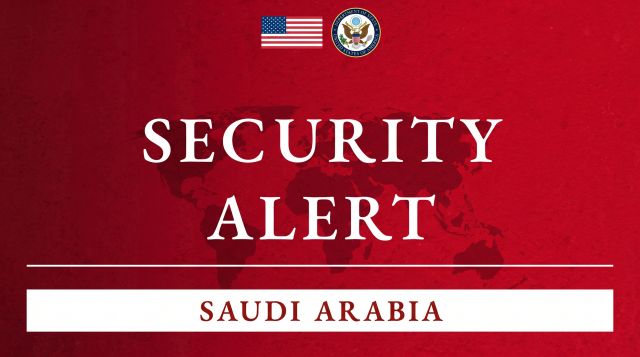
The State Department's October 12 update keeps Saudi Arabia at Level 3 and now cites drone and missile threats from both Iran and the Houthis. Source: U.S. Department of State Official Website
## What Changed in the Saudi Arabia Travel Advisory?
Saudi Arabia's travel advisory is still at Level 3, just as it has been throughout the year. Both the October 10 and October 12 updates kept that rating in place, but the warnings have become more specific. The latest advisory now highlights drone and missile threats from Iran and the Iranian-backed Houthis, with particular attention to the risks associated with air travel.
One of the biggest changes involves US government employees. As of October 12, they need special authorization to travel through any airport in Saudi Arabia. Just two days earlier, that restriction applied only to King Khalid International Airport in Riyadh. The State Department is also encouraging private American travelers to take similar precautions. Flights aren't banned, but the updated guidance gives travelers good reason to reconsider their plans or explore other ways to get around.
The October 12 advisory also includes some practical advice. Travelers looking for alternatives to domestic flights can consider Saudi Arabia Railways, SAPTCO, or SAT Transportation. There's also an important warning about taking photos or videos. Americans are being told not to photograph, film, or share footage of missile or drone interceptions and impact sites, as Saudi authorities have already detained US citizens for doing so.
Both updates were published on the State Department's website and shared through its @TravelGov account on X. It's also worth understanding the difference between a travel advisory and a security alert. The travel advisory provides an overall safety rating for the country, while security alerts from the US Embassy in Riyadh offer more immediate information for Americans already there.
Those alerts can come at any time, even when the country's official advisory level hasn't changed.
Here's a look at the key events and advisory updates leading up to the latest changes:
February 28: Hostilities between the US and Iran begin, followed by Iranian drone and missile attacks on targets in Saudi Arabia.
March 13: The State Department reissues its Level 3 advisory after ordering non-emergency US government personnel to leave the country.
April: A truce in the Iran conflict brings a decline in attacks on Riyadh and eastern Saudi Arabia.
August 29: Family members of US government employees are allowed to return to Saudi Arabia.
September 15: New travel restrictions are introduced for US government employees, including limitations involving Taif and Yanbu.
October 6–8: Houthi strikes on airports in Riyadh and Abha reportedly kill six people.
October 10: An attack on Riyadh's airport reportedly kills 12 people and injures more than 300, prompting another advisory update.
October 11: Another projectile reportedly strikes Riyadh's airport, causing a fire. The Houthis also claim attacks on Dammam's airport.
October 12: The State Department updates its advisory again, requiring US government employees to obtain special authorization before using any airport in Saudi Arabia.
The latest wave of attacks began on October 5, when the Houthis in Yemen started targeting airports across Saudi Arabia. They also warned international airlines to avoid Saudi airspace, with the exception of areas over Mecca and Medina. Attacks on airports in Abha and Riyadh on October 6 and 7 left three people dead. Two more strikes on Riyadh's King Khalid International Airport on October 8 killed another three Saudi citizens, including a Saudia pilot.
Things took a much more serious turn on Saturday afternoon, October 10, when a missile struck the airport complex housing Riyadh's domestic terminals. According to Saudi authorities, 12 people were killed and more than 300 injured, some critically. It was the country's deadliest attack in more than a decade, and Saudi Arabia's threat warning system reportedly gave no advance warning.
Among those killed were four Saudi citizens and eight foreign nationals, including one American. Secretary of State Marco Rubio later confirmed the US citizen's death and condemned the attack.
Flights were diverted, and the airport closure was extended into at least the early hours of Monday, October 12. The US Embassy in Riyadh urged Americans to stay away from the airport and surrounding area, while the UK, Germany, Australia, and Canada issued similar warnings. That same day, a projectile also landed near King Fahd International Airport in Dammam, marking the first reported attack on that airport since February.
And the attacks continued. On Sunday, October 11, another projectile struck King Khalid International Airport, starting a fire, while Saudi air defenses intercepted a second missile nearby. The Houthis also claimed responsibility for attacks on Dammam's airport and warned airlines, passengers, and airport workers to avoid Saudi airports entirely.
Saudi Arabia has promised to respond, while President Trump has said he's considering whether US forces should take part in strikes against the Houthis. With tensions still running high, the situation could change quickly, making it especially important for travelers to keep an eye on official updates before heading to the airport.
Riyadh's King Khalid International Airport, shown here on an ordinary day, has been attacked repeatedly this month, including on October 10, when 12 people were killed.
Airlines pulled back again after Saturday’s attack, and several have extended their pauses. Here’s where things stood as of October 11 and 12:
Lufthansa Group: Riyadh flights suspended through October 16.
SriLankan Airlines: Riyadh flights suspended through October 18.
flydubai: Riyadh flights suspended through October 14.
Emirates: Riyadh flights cancelled on October 11 and 12.
Etihad: Eight Abu Dhabi to Riyadh flights cancelled on October 11 and 12.
Qatar Airways: Multiple Doha to Riyadh flights cancelled, some into Monday, October 12.
Oman Air and SalamAir: Muscat to Riyadh flights suspended on October 12.
Air India and Pakistan International Airlines: Riyadh flights suspended for varying periods since earlier in the week.
Many Americans reach Riyadh through Europe or the Gulf, so these pauses affect connections in Frankfurt, Munich, Doha, Dubai and Abu Dhabi. If your airline cancels, you’re generally entitled to a refund or rebooking. Don’t count on extra cash compensation, though, because security threats usually count as extraordinary circumstances under EU passenger rules.
Riyadh airport is asking passengers to check with their airline before heading there. The US Embassy’s advice is to confirm your flight with both the airline and the airport, and to have a backup plan that doesn’t involve flying at all.
Lufthansa, flydubai, SriLankan, Emirates, Etihad and Qatar Airways have cancelled or suspended Riyadh flights after this month's attacks on King Khalid International Airport.
A layover in Doha, Dubai, or Abu Dhabi doesn't mean you're traveling to Saudi Arabia, and the country's travel advisory doesn't apply to those airports. So far, this week's cancellations have mainly affected flights to Saudi destinations rather than the major Gulf hubs. If you're connecting through the region on your way to Asia, Africa, or Europe, there's no need to cancel your trip based on the Saudi advisory alone.
That said, there's one thing worth keeping an eye on: the airspace your flight passes through. Saudi Arabia is roughly three times the size of Texas, and many flights across the Gulf travel through its airspace. While the Houthis have warned airlines to stay away, that doesn't automatically mean the airspace is closed. Saudi authorities control those decisions, and airlines also consider government restrictions and their own safety assessments. The FAA already has restrictions in place for certain civil aviation operations in and around Saudi Arabia. If airlines choose to avoid the area, some flights could take longer, which could make tight connections a little more stressful.
If you're traveling through the region, give yourself some extra time between flights. It's also worth avoiding separately booked tickets, since a delay on your first flight could leave you paying for a replacement connection. The State Department's Worldwide Caution remains in effect, and Qatar and the UAE have their own travel advisories, so check the guidance for any country where you'll actually be stopping.
The US Embassy in the UAE has also encouraged Americans to remain extra vigilant following the attacks in Saudi Arabia, warning that the situation could escalate quickly. For now, the best approach is to keep your plans flexible, check directly with your airline, and stay up to date on any changes before you travel.
Level 3 isn’t Level 4, and nothing in the advisory orders Americans to leave. Still, this is the most serious week for travelers to Saudi Arabia since the spring. If you have flexibility, postponing is a reasonable call.
If you’re heading to Riyadh for work this week, you won’t be alone. The five-day WPC Energy Congress opened on Sunday at a convention center about 6 miles from the airport, with more than 70 ministers expected. Saudi officials kept it on the schedule after Saturday’s attack.
If you’re going, or you’re already there, these steps matter:
Enroll in STEP. The free Smart Traveler Enrollment Program sends embassy alerts to your inbox and helps consular staff reach you in an emergency.
Avoid Riyadh’s airport unless you’re flying. The US Embassy recommends staying away from the airport and the surrounding area.
Check your flight twice. Confirm departures with both the airline and the airport, and book changeable fares where you can.
Consider ground options. The advisory points to Saudi Arabia Railways, SAPTCO and SAT Transportation as alternatives to domestic flights.
Keep your camera down. Don’t photograph, film or post interceptions, debris or damaged sites.
Turn on Saudi alerts. Follow national alerts from Saudi Arabia’s Civil Defense, while knowing the October 10 strike came without one.
Stay away from the south. The Yemen border region is Level 4, and the US government has limited ability to help there.
Make your own exit plan. The advisory says to have a way out that doesn’t depend on US government help. The State Department’s crisis response guide is a good place to start.
Save the numbers. US Embassy Riyadh is +966-11-835-4000, Jeddah +966-12-220-5000 and Dhahran +966-13-839-5700. From the US, call 1-888-407-4747.
Enrolling in STEP and checking your flight with both the airline and the airport are the simplest ways for Americans to stay ahead of changes in Saudi Arabia right now.
Saudi Arabia has spent the past few years opening its doors to visitors, and it’s hard to watch a week like this one unfold. If your trip is on the calendar, keep it flexible and keep your phone charged. Let your airline and the embassy, not a headline, guide what you do next. If you’re only passing through a Gulf hub, a bigger buffer on your connection and a quick check of your route should cover most of what this week can throw at you.
The State Department rates Saudi Arabia Level 3, “reconsider travel,” and updated its guidance on October 12 after a deadly attack on Riyadh’s airport. It isn’t a do-not-travel order, but airports have been targeted repeatedly this month, and an American was among those killed.
Saudi Arabia is at Level 3 of 4 as of the October 12, 2026, update. The region along the Yemen border is Level 4, “do not travel.”
A missile attack on King Khalid International Airport on October 10 killed 12 people, including a US citizen, and injured more than 300. It was one of several attacks on the airport that week, and another projectile struck it on October 11.
The airport was closed after the October 10 attack, and the closure was extended into October 12. Check with your airline and the airport before traveling, since schedules are changing daily. [UPDATE WITH CURRENT STATUS]
Lufthansa Group suspended Riyadh flights through October 16, SriLankan through October 18 and flydubai through October 14. Emirates, Etihad, Qatar Airways, Oman Air, SalamAir, Air India and PIA have also cancelled or suspended flights.
The Saudi advisory doesn’t apply to those airports, and this week’s cancellations focused on routes into Saudi Arabia. Check the advisories for Qatar or the UAE and leave extra connection time, since flights crossing Saudi airspace could be rerouted.
No. The State Department warns against photographing, filming or sharing anything about interceptions or impact sites, and Saudi authorities have detained Americans for doing so.
Yes. The State Department says Americans have been detained over posts, reposts and likes, including some made before they traveled. Sentences have reached 45 years.