We use cookies to enhance your browsing experience, serve personalized content, and analyze our traffic. By clicking "Accept All" you accept this and consent that we share this information with third parties and that your data may be processed in the USA. For more information, please read our .
You can adjust your preferences at any time. If you deny, we will use only the essential cookies and unfortunately, you will not receive any personalized content.

Salem, Massachusetts, is celebrating its 400th anniversary throughout 2026 with exhibitions, festivals, historical programs, and the return of a major city parade. The anniversary commemorates Salem’s European settlement in 1626 while also recognizing that Naumkeag was an established Indigenous community long before colonists arrived. The witch trials remain part of the story, naturally, but this year’s events give travelers a much wider look at the city behind the pointy hats and plastic broomsticks.
Salem was settled in 1626, making 2026 the Massachusetts city’s official quadricentennial year.
The witch trials occurred in 1692, roughly 66 years after the settlement being commemorated.
The Heritage Days Parade returns August 1 at 10 a.m. after an absence of more than 30 years.
Haunted Happenings runs October 1 through 31 with parades, tours, costume events, vendors, performances, and haunted attractions.
The Halloween Grand Parade begins October 1 at 6:30 p.m. and travels through downtown to Salem Common.
Beyond the Broom features 60-plus films exploring Salem stories that have little or nothing to do with witchcraft.
Anniversary programming continues after Halloween, including a 17th-century Puritan funeral reenactment on November 20.
The official Salem 400+ commemoration is deliberately broader than the city’s famous witch-trial history. Organizers are acknowledging the Indigenous Naumkeag community that existed before 1626 while exploring Salem’s maritime economy, immigrant communities, civic life, architecture, literature, industry, and modern identity. That fuller approach makes the anniversary more interesting than a year-long Halloween promotion.
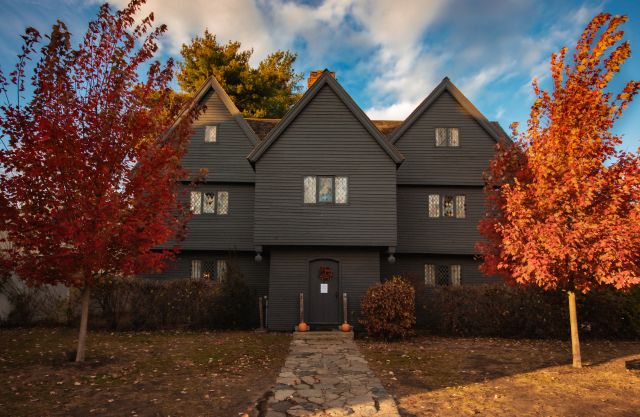
The plus sign in Salem 400+ matters. It recognizes that the city’s story didn’t begin when English settlers arrived, and many of the exhibitions highlight people and communities that are usually reduced to a sentence in traditional Salem itineraries. Travelers can still visit the Witch House and Witch Trials Memorial, but the anniversary encourages them to keep walking afterward.
The headline event is the Salem 400+ Heritage Days Parade on August 1. Beginning at 10 a.m., the parade will unfold chronologically, starting with Indigenous history before moving through the colonial era, witch trials, maritime period, industrial growth, cultural milestones, and contemporary Salem. It draws inspiration from the city’s 1926 tercentenary parade and is returning after more than three decades.
Several other programs are worth building a visit around:
July 26: Salem Summer Jam brings free music, cultural performances, and family activities to Salem Willows Park.
August 2: Fusion Fest celebrates Salem’s immigrant communities at the House of the Seven Gables.
August 3: A presentation explores the life and execution of Mary Easty, one of the victims of the 1692 trials.
August 24 to September 18: Lesser Known Stories brings an immersive installation centered largely on Salem’s BIPOC history to Old Town Hall.
September 25: Mayor’s Night Out officially kicks off Salem’s spooky season.
November 20: A Puritan funeral procession will travel down Essex Street toward Charter Street Cemetery.
The Peabody Essex Museum is one of the best places to understand what Salem is attempting this year. Its ongoing Salem Stories exhibition presents 26 snapshots of the city, while Beyond the Broom brings together more than 60 mini-documentaries made by local filmmakers. Subjects range from community traditions to vanished businesses and neighborhood institutions.
Beyond the Broom continues through August 31, 2027, so travelers don’t have to squeeze it into one anniversary weekend. Other rotating exhibitions examine Salem’s global maritime connections and the city’s links to the Declaration of Independence. It’s a helpful counterweight to the souvenir shops outside, although there is absolutely room in a balanced itinerary for both serious history and an ill-advised witch hat.
Salem Haunted Happenings runs throughout October, beginning with the Grand Parade at 6:30 p.m. on October 1. The annual festival includes walking tours, museums, psychic events, haunted houses, vendors, costume parties, theatrical presentations, and family programming. Organizers say more than one million people now visit during October, compared with roughly 50,000 during the festival’s first year in 1982.
The complete 2026 calendar is still being updated, so travelers should treat currently listed events as the beginning rather than the final schedule. The official calendar recommends buying timed tickets in advance and confirming details with individual organizers. Destination Salem’s app also provides live information on events, parking, traffic, and public restrooms, which becomes increasingly useful as Halloween approaches.
Summer and early September offer the easiest way to experience anniversary programming without the full October crowd. The August 1 parade creates a natural anchor for a long weekend, while the museum exhibitions, maritime sites, historic houses, and waterfront can fill the remaining days. Families may also prefer the summer Hands on History sessions at the House of the Seven Gables, which run on weekends through August 30.
October is the better choice for travelers who actively want costumes, crowds, haunted attractions, and peak spooky-season energy. Lodging and ticketed tours should be reserved early, particularly for weekends. Even people staying in Boston should build flexibility into their schedule, since Salem’s compact downtown becomes extremely busy and road access may change during major events.
We suggest spending the night outside of Salem and taking the train if possible!
Salem’s 400th year is a good excuse to visit, but the smartest version of the trip won’t treat 1692 as the city’s entire identity. Spend time with the difficult history, enjoy the Halloween spectacle, and leave room for the maritime stories, local filmmakers, immigrant communities, and modern residents who are shaping what comes next. Salem is leaning into the broomsticks this year, but it’s also asking visitors to look beyond them.
Salem’s quadricentennial commemorates the European settlement established in 1626. The official Salem 400+ program also recognizes that an Indigenous community existed at Naumkeag long before English settlers arrived.
No. The Salem witch trials occurred in 1692, so 2026 marks 334 years since the trials. The 400th anniversary relates to Salem’s settlement rather than the witchcraft prosecutions.
The Salem 400+ Heritage Days Parade takes place on Saturday, August 1, 2026, beginning at 10 a.m. It will present the city’s history in chronological order and is scheduled to proceed rain or shine.
Salem Haunted Happenings runs from October 1 through October 31. The opening Grand Parade begins at 6:30 p.m. on October 1 and ends at Salem Common.
Yes. Summer 2026 includes the anniversary parade, community festivals, museum exhibitions, historical presentations, and family programming. Visiting outside October also means lighter crowds and fewer Halloween-related closures.
Some anniversary programs are free, while museums, tours, performances, and special events may require admission or advance reservations. Travelers should check the individual organizer’s listing before arriving.
Beyond the Broom is a Peabody Essex Museum exhibition featuring more than 60 short documentaries by local filmmakers. It focuses on Salem’s communities, businesses, traditions, and lesser-known stories beyond the witch trials.