
We use cookies to enhance your browsing experience, serve personalized content, and analyze our traffic. By clicking "Accept All" you accept this and consent that we share this information with third parties and that your data may be processed in the USA. For more information, please read our .
You can adjust your preferences at any time. If you deny, we will use only the essential cookies and unfortunately, you will not receive any personalized content.
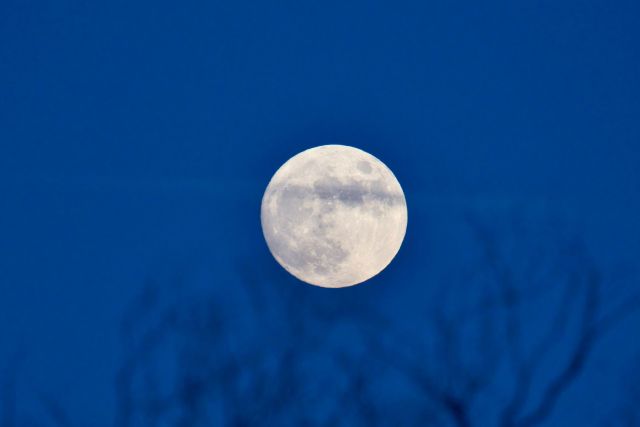
A rare Blue Moon rises this weekend, giving skywatchers one of those easy, no-equipment-needed reasons to step outside after sunset. Despite the name, the moon will not actually turn blue. It may look golden, orange, or amber near the horizon, and this one comes with an extra twist: it is also a micromoon. That means it will be farther from Earth than usual, making it appear slightly smaller than an average full moon.
Peak Illumination: The Blue Moon peaks at 4:45 a.m. ET on Sunday, May 31, but the best viewing is moonrise on Saturday, May 30.
The Name: It is called a Blue Moon because it is the second full moon in May, given that the first occurred on May 1.
The Color: It will not look blue. Expect orange or gold near the horizon, fading to silver as it climbs.
The Size: This is also a micromoon, making it the smallest and most distant full moon of 2026.
Viewing: No equipment is needed. You just need clear skies, a view of the eastern horizon, and a few minutes after sunset.
Weather Backup: If clouds roll in Saturday, the moon looks essentially full from Friday night through early Sunday.
The May 2026 Blue Moon reaches peak illumination at 4:45 a.m. ET on Sunday, May 31. For most people, though, the better viewing moment is not the exact instant of fullness. It is moonrise on Saturday evening, May 30.
That is when the full moon climbs above the eastern horizon shortly after sunset, often looking bigger, warmer, and more dramatic than it does later in the night. Check the moonrise time for your exact location before heading out, since the timing can vary by city.
For the best view, find a place with a clear eastern horizon. A beach, hilltop, open field, lakefront, rooftop, or park with fewer buildings can make a big difference.
A Blue Moon usually refers to the second full moon in a single calendar month. That is what is happening this weekend. May's first full moon, the Flower Moon, arrived on May 1. The second arrives on May 31.
The name is a little misleading. A Blue Moon does not usually look blue. The phrase is about timing, not color. Around moonrise, it is much more likely to look orange or gold because moonlight passes through more of Earth's atmosphere when the moon is low on the horizon.
There is also a second definition of Blue Moon. Sometimes it refers to the third full moon in a season that has four full moons instead of the usual three. This May event is the more familiar calendar-month version.
This Blue Moon is extra unusual because it is also a micromoon. A micromoon happens when a full moon occurs while the moon is near its farthest point from Earth in its orbit.
The moon's orbit is not a perfect circle. Sometimes it is closer to Earth, which can create a supermoon. Sometimes it is farther away, which creates a micromoon. This weekend's full moon will be the smallest full moon of 2026, though the difference may be subtle to the naked eye.
In other words, do not expect a tiny moon. Expect a normal-looking full moon with a rare bit of astronomy trivia attached.
Look east after sunset on Saturday night. The moon should rise low and bright, with its color shifting from amber to pale silver as it climbs higher into the sky. You may also be able to spot Antares, the reddish star in the constellation Scorpius, near the moon. Since the moon will be very bright, darker skies will help, but you do not need a telescope or binoculars to enjoy the view.
The easiest plan is simple: check your local moonrise time, go outside a few minutes early, face east, and give your eyes time to adjust.
This is not the kind of sky event that requires special glasses, expert knowledge, or a midnight alarm. The rare Blue Moon will be easy to see if your skies are clear, and the best moment comes right around moonrise on Saturday evening. It won't be blue, and it may not look dramatically smaller, but it is still a lovely excuse to look up.
No. A Blue Moon usually does not look blue. The name refers to timing, not color. Near the horizon, the moon may look orange, gold, or amber.
The full moon peaks at 4:45 a.m. ET on Sunday, May 31, but the best time to watch is moonrise on Saturday evening, May 30. Check your local moonrise time for the most accurate viewing window.
This is a Blue Moon because it is the second full moon in May 2026. The first full moon of the month happened on May 1.
A micromoon happens when a full moon occurs while the moon is near its farthest point from Earth. This makes it appear slightly smaller than an average full moon.
No. The Blue Moon is visible with the naked eye. Binoculars can make the lunar surface more interesting, but they are not necessary.
The next seasonal Blue Moon is expected on May 20, 2027. The next monthly Blue Moon, like this one, is expected on December 31, 2028.