We use cookies to enhance your browsing experience, serve personalized content, and analyze our traffic. By clicking "Accept All" you accept this and consent that we share this information with third parties and that your data may be processed in the USA. For more information, please read our .
You can adjust your preferences at any time. If you deny, we will use only the essential cookies and unfortunately, you will not receive any personalized content.

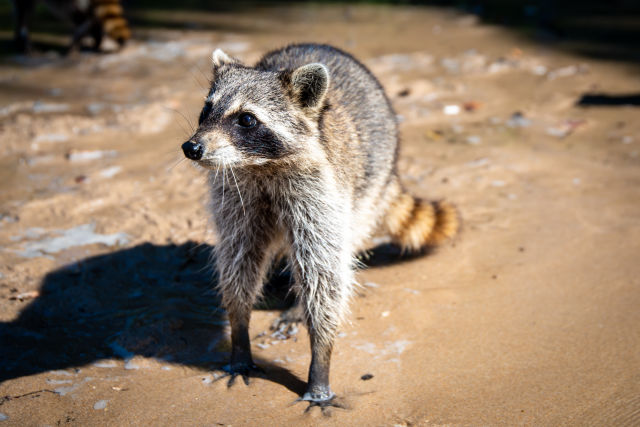
Somewhere in Biscayne Bay, about six miles from Miami Beach, there is an island. This island was made entirely from dredge spoil in the 1970s, meaning it is literally a pile of material scraped from the bottom of the bay. It has no infrastructure, no hotels, and no gift shop. What it does have is 40 to 60 wild raccoons who have claimed it as their own and are fully committed to the bit. Nobody knows how they got there. The island was once called Sandspur Island. Then it was called Beercan Island, which is arguably more honest. Now it's called Raccoon Island because the raccoons won.
The island covers 15 acres and was created from sediment dredged from Biscayne Bay in the 1970s.
Nobody knows how the raccoons arrived. Theories involve Hurricane Andrew, floating debris, or humans relocating them.
The island has three names: Sandspur Island, Beercan Island, and Raccoon Island.
You can visit by water using a kayak, paddleboard, or boat tour from Miami Beach or Bal Harbour.
Feeding the raccoons is prohibited. Visitors should never feed, touch, corner, or otherwise interact with them.
The raccoons are active during the day, despite raccoons typically being associated with nighttime activity.
The island sits in Biscayne Bay, approximately six miles from Miami Beach.
The origin story of Raccoon Island is that there is no real origin story, which is exactly the kind of thing Florida does.
In the 1970s, the Army Corps of Engineers needed somewhere to put sediment dredged from Biscayne Bay. In dredging terms, that material is called “spoil,” meaning the sand, mud, shells, and other debris removed from the bottom of a waterway. It does not necessarily mean the material was polluted. It was simply what was left over after deepening and maintaining the bay.
The spoil was piled in one place until it rose above the water and became an island. Visitors quickly recognized it as an ideal place to anchor a boat, open a beer, and occasionally leave the can behind.
Sandspur Island, as it appeared on maps, became Beercan Island to nearly everyone who visited. The nickname was not ironic.
Then the raccoons showed up.
At some point, a population established itself on the island and stayed. Nobody knows exactly when they arrived or how they managed it, which is how a pile of dredged sediment eventually became known as Raccoon Island.
There are two popular theories about how 40 to 60 raccoons came to live on an isolated spoil island in Biscayne Bay.
Hurricane Andrew struck South Florida as a Category 5 hurricane on August 24, 1992. Islands flooded and debris traveled across the water.
The theory is that a group of mainland raccoons reached the island on floating debris and, upon arriving, decided they liked it better than wherever they came from.
This is the more Florida version of events.
Someone may have transported “problem” raccoons to the island to get them out of a neighborhood. That means there is a nonzero chance Raccoon Island exists because someone in Miami could not deal with raccoons raiding their trash and solved the problem by giving them their own island.
Both theories remain unverified. Both are extremely plausible. This is Florida.
You can’t drive to Raccoon Island. There aren’t any roads, bridges, or parking lots. You’ll get there by kayak, paddleboard, or boat tour, with many excursions departing from Miami Beach or Bal Harbour.
The trip generally takes around 20 to 30 minutes, depending on the departure point and conditions on the water.
When you arrive, the raccoons may already be watching you. They’ve perfected an expression that sits somewhere between “interested” and “I’ve seen tourists before.”
They’re bold and curious. Some guides describe them as friendly, which in raccoon terms means they may approach visitors rather than immediately running away.
You can’t feed them. That’s the most important sentence in this article.
Feeding wild animals can make them dependent on humans and increase the likelihood of aggressive encounters. Tour guides enforce the no-feeding rule with the energy of someone protecting both the raccoons and their livelihood.
Do not feed the raccoons.
Do not touch the raccoons.
Do not corner or chase the raccoons.
Keep food securely packed away.
Bring water and sunscreen.
Follow all instructions provided by your guide.
Do not be surprised when the raccoons ignore you entirely and go about their business.
If you want a traditional beach day in Miami, there are better options.
If you want to paddle across Biscayne Bay to a pile of dredged sediment and spend an hour watching raccoons do raccoon things while questioning every life choice that led you there, then Raccoon Island is absolutely worth visiting. The beer cans mostly get cleaned up now, and the raccoons remain, for reasons that are entirely their own.
It is genuinely fun, genuinely strange, and genuinely Florida.
You can reach Raccoon Island by kayak, paddleboard, or boat tour. Many tours depart from Miami Beach or Bal Harbour and take approximately 20 to 30 minutes each way. You cannot drive or walk to the island.
The raccoons are wild animals and should be treated as such. Visitors should never feed, touch, chase, or corner them. Keep a safe distance and follow instructions from tour guides.
Feeding wild raccoons can cause them to lose their natural fear of people and associate visitors with food. This increases the likelihood of bites, scratches, and other unsafe interactions.
Nobody knows for certain. One theory suggests Hurricane Andrew carried raccoons to the island on floating debris in 1992. Another suggests humans intentionally relocated problem raccoons there. Neither theory has been confirmed.
You can visit throughout the year, although summer can bring intense heat, thunderstorms, and choppier water. Early morning tours may offer cooler temperatures and calmer conditions.
Technically, yes, if you have your own kayak, paddleboard, or boat. However, many visitors choose an organized tour with guides who understand the area, wildlife rules, and changing water conditions.