We use cookies to enhance your browsing experience, serve personalized content, and analyze our traffic. By clicking "Accept All" you accept this and consent that we share this information with third parties and that your data may be processed in the USA. For more information, please read our .
You can adjust your preferences at any time. If you deny, we will use only the essential cookies and unfortunately, you will not receive any personalized content.

America turns 250 on July 4, 2026, and there’s no better reason to finally see the places that make America feel so impossible to sum up. From revolutionary streets in Boston, Philadelphia, and Washington, D.C. to canyon rims, coastal parks, Southern cities, and tropical reefs, these 10 places show just how wildly varied America really is. Some are obvious for the history. Others are here for the landscapes, food, road trips, and “wait, this is in the U.S.?” moments that make the country worth exploring. Here's where to start.
The United States turns 250 on July 4, 2026, marking 250 years since the adoption of the Declaration of Independence.
Washington, D.C. is the best overall destination for major national commemorations, exhibitions, and public events.
Boston and Philadelphia offer the strongest connections to the American Revolution and the founding of the country.
The Grand Canyon, Acadia, and Southern Utah are the standout national park destinations for travelers who want to celebrate through America’s landscapes.
Charleston combines history, architecture, and food in one of the South’s most rewarding city breaks.
Bar Harbor and Key Largo offer two very different coastal escapes, from Maine’s rocky shoreline to the coral reefs of the Florida Keys.
Cascade Locks is a convenient base for Multnomah Falls and the waterfalls, trails, and viewpoints of the Columbia River Gorge.
Ithaca is one of the best bases for exploring the Finger Lakes, with easy access to waterfalls, wineries, hiking trails, and state parks.
Maine doesn't ease you in. Acadia hits hard: rocky coastline, cold Atlantic air, pink granite summits that glow at sunrise in a way that feels almost unreasonably beautiful. It's one of the most visited national parks in the country, and one of the most underrated in conversation. Cadillac Mountain is famously the first place in the continental US to see the sun rise from October through March, which is either a great reason to set an alarm or a great reason to visit in summer and sleep in.
The park sits on Mount Desert Island and mixes hiking, cycling the historic carriage roads, and tide-pooling in a way that works for almost every kind of traveler. The nearby town of Bar Harbor is charming without being cloying. Lobster is mandatory. Come in fall if you can. The foliage combined with the coastline is one of the genuinely spectacular things this country produces.
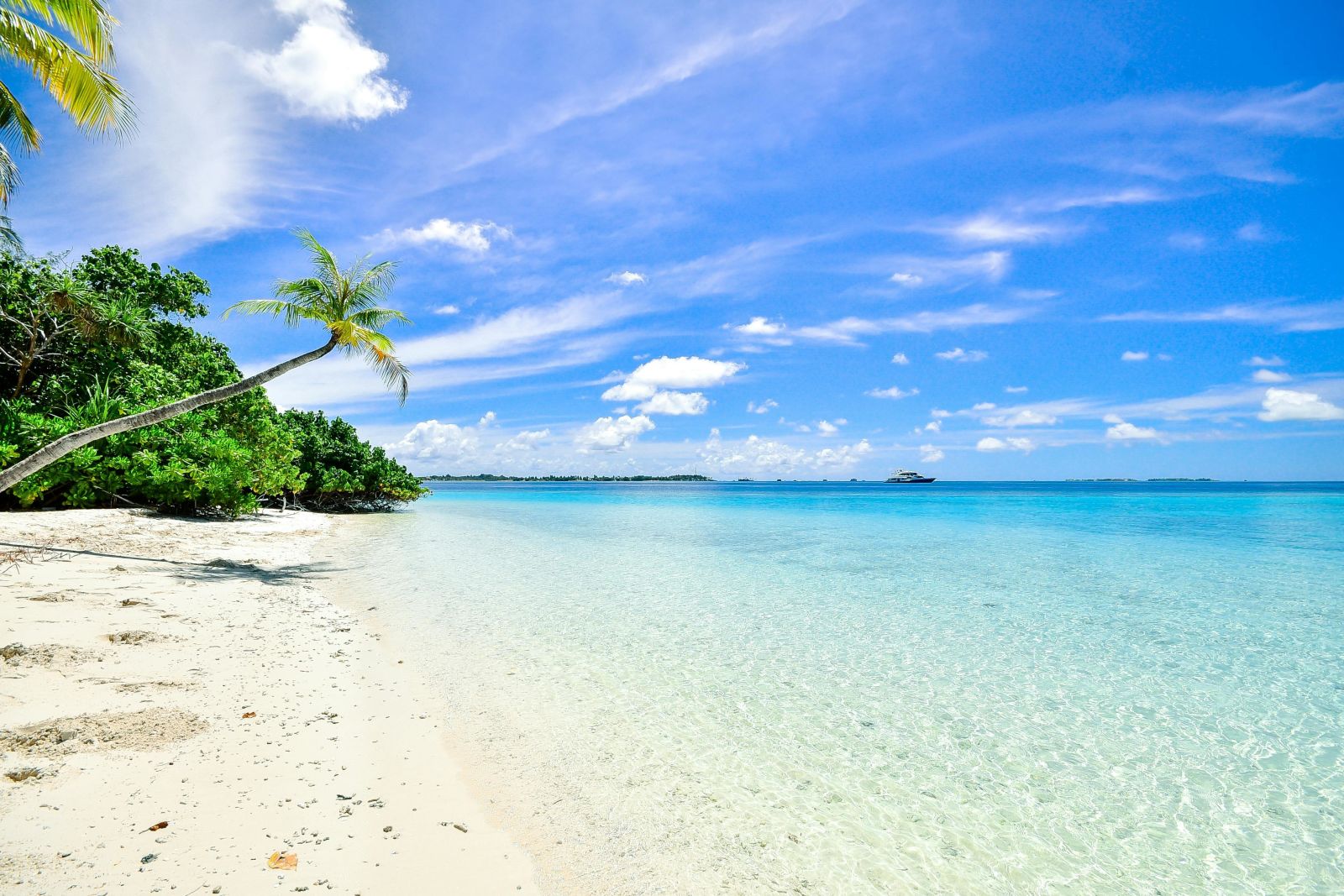
Key Largo is where America gets a little tropical and doesn't apologize for it. The northernmost of the Florida Keys, it sits just south of Miami and serves as the gateway to John Pennekamp Coral Reef State Park, the first undersea park in the United States and one of the best places in the country to snorkel or dive without a passport. The reef here is alive in a way that still surprises people who expect it to be gone.
Above water, it's laid-back in the best sense: tiki bars, sunset cruises, fresh fish tacos, and the kind of afternoon that disappears without explanation. The Overseas Highway drive down from Miami is an experience in itself: 113 miles of road with ocean on both sides. It's not trying to be the Caribbean. It's something distinctly American: sun-bleached, warm, and a little bit wild.
The Columbia River Gorge is one of those places that stops a conversation. It's an 80-mile canyon carved by the Columbia River along the Oregon-Washington border, lined with hundreds of waterfalls, dramatic basalt cliffs, and viewpoints that photographers have been chasing for a century. Multnomah Falls alone, at 620 feet and one of the tallest in the US, is worth the detour.
What makes it special for a 250th anniversary trip is how deeply American the story is. The Lewis and Clark Expedition passed through here in 1805, following the river west to the Pacific. The Historic Columbia River Highway, built in 1916, was the first scenic highway in the country. Standing here, it's easy to understand why people kept heading west. The wind in the Gorge is strong enough that it's become a world-class kiteboarding destination, which is a very different reason to visit but an equally good one.
Southern Utah is not one place. It's five national parks within a few hours of each other, and that concentration of jaw-dropping landscape is almost unfair. Zion, Bryce Canyon, Capitol Reef, Canyonlands, and Arches: each one different enough that visiting all five doesn't feel repetitive. Zion's slot canyons are claustrophobic and magnificent. Bryce Canyon's hoodoos look like something from a different planet. Arches has 2,000 natural stone arches, which is a number that doesn't feel real until you're standing in front of one.
The region has been inhabited for thousands of years. The ancestral Puebloans left cliff dwellings and petroglyphs that put the 250-year milestone in sharp perspective. If you're doing a road trip, this is the stretch that will feature most heavily in everyone's photos. Pack more water than you think you need. The sun here is serious.
Philadelphia has been preparing for America’s 250th birthday longer than almost anywhere else, which makes sense considering the country was effectively born here. Independence Hall is where the Declaration of Independence and the U.S. Constitution were debated and signed. The Liberty Bell sits just across the street, and the surrounding blocks of Old City contain enough cobblestones, colonial buildings, and revolutionary history to make the entire neighborhood feel like an open-air museum.
But Philadelphia is not here solely because something important happened there 250 years ago. It is one of America’s great food cities, home to Reading Terminal Market, the Italian Market, excellent neighborhood restaurants, and a sandwich culture people defend with startling intensity. Murals cover buildings across the city, the Philadelphia Museum of Art anchors the Benjamin Franklin Parkway, and neighborhoods like Fishtown and East Passyunk show how much more there is beyond the historic center.
Recently voted one of the top destinations in the United States, Ithaca and the surrounding Finger Lakes region is the kind of place that surprises people who assume New York begins and ends with the city. It doesn’t. This is gorge country, with more than 150 gorges in Tompkins County alone, which inspired the local bumper sticker: “Ithaca is Gorges.” Watkins Glen, Taughannock Falls, and Buttermilk Falls State Park are just a few of the places that make the hiking here genuinely spectacular.
The Finger Lakes wine trail is one of the best in the country, particularly for Riesling, which thrives in the region's cool climate. The lakes themselves are long, deep, and cold enough to swim in comfortably through summer. Ithaca has the energy of a college town, with Cornell and Ithaca College both located here, without losing the feel of a small city that takes food, culture, and the outdoors seriously. It's an easy drive from New York City, Philadelphia, or Toronto, and dramatically undervisited relative to what it offers.
Charleston has been a city worth visiting for three centuries, and it's only gotten better at it. The historic downtown sits on a peninsula between two rivers, packed with 18th-century architecture, rainbow-painted row houses, and church steeples that still define the skyline. The food scene is arguably the best in the South right now, with chef-driven restaurants that take Lowcountry cooking seriously alongside the kind of neighborhood spots you stumble into and never forget.
Fort Sumter, where the first shots of the Civil War were fired in 1861, sits in the harbor and is accessible by boat. The city's history with slavery is profound and present. The International African American Museum, which opened in 2023 on the very site where thousands of enslaved people first arrived in America, is one of the most important new museums in the country. Charleston doesn't look away from its history. It's better for it, and so is anyone who visits.
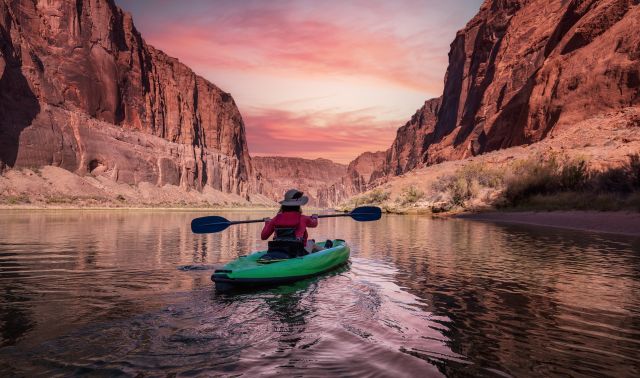
There's a reason the Grand Canyon is on every list. It's 277 miles long, up to 18 miles wide, and over a mile deep, and photographs, without exception, fail to capture it. The first view from the South Rim is a genuine sensory event. Most people stand there for a moment trying to get their bearings. It takes a few minutes before the scale registers.
The canyon has been carved over five to six million years by the Colorado River, with rock layers at the bottom that date to nearly two billion years ago. It has been a national park since 1919, and a UNESCO World Heritage Site since 1979. Hiking into it changes the experience entirely. The Bright Angel Trail gets you below the rim and into the geology in a way that the overlooks can't match. If you're celebrating 250 years of America, this is the reminder that the land was here incomprehensibly long before anyone was counting.
If you're marking 250 years of American independence, Boston is required. This is where a significant portion of the Revolution actually happened: the Boston Massacre, the Tea Party, Paul Revere's ride, Bunker Hill, the Old North Church. The Freedom Trail is a 2.5-mile walking route that connects 16 historic sites, and it's one of the best self-guided history experiences in the country. You can do it in an afternoon or take your time over two days.
But Boston isn't a museum piece. It's a living, densely packed, deeply opinionated city with world-class universities, a food scene that has finally shed its old reputation, and neighborhoods that each feel like their own city. The North End's Italian restaurants, the South End's galleries, Cambridge's bookshops. Boston rewards the people who get off the Freedom Trail and wander. Come in fall, when the city is at its most itself: football, foliage, and an energy that doesn't exist in the same form anywhere else.
For the 250th anniversary of the United States, there's only one place to be. Washington, D.C. is the capital, the symbol, the stage, and in 2026 it will be the center of every major national celebration marking the semiquincentennial. The Mall alone is one of the great public spaces on earth: the Lincoln Memorial, the Washington Monument, the Vietnam Veterans Memorial, the reflecting pool, and every Smithsonian museum is free.
Beyond the monuments, D.C. is a city of lively neighborhoods, international restaurants, historic row houses, and green spaces that feel far removed from the ceremonial grandeur of the Mall. Spend an afternoon exploring Georgetown, browse the food stalls at Union Market, walk along the waterfront at The Wharf, or visit the restaurants and music venues along U Street. During the anniversary celebrations, expect the entire city to feel like part museum, part festival, and part front-row seat to American history.
America’s 250th anniversary is a chance to celebrate its history, but it is also an excuse to see more of the country as it exists today. Follow the revolutionary story through Boston, Philadelphia, and Washington, D.C., or trade the monuments for coral reefs, canyon rims, waterfalls, and open roads. There is no single place that explains America, but these 10 destinations are a very good place to begin.
The official term is the semiquincentennial, though you'll also see it called America250 or the U.S. Sestercentennial. It marks 250 years since the signing of the Declaration of Independence on July 4, 1776.
July 4, 2026. Major celebrations, events, and commemorations are planned across the country throughout 2026, with Washington, D.C. serving as the primary host city.
Philadelphia is where the Declaration of Independence and the U.S. Constitution were debated and signed. The city is also hosting major events and celebrations throughout 2026, making it one of the most historically significant places to mark the anniversary.
The Grand Canyon, Acadia, and the five parks of southern Utah, Zion, Bryce Canyon, Capitol Reef, Canyonlands, and Arches, are the standout options. All offer experiences that feel distinctly and irreplaceably American.
Yes. The 2.5-mile walking route connects 16 Revolutionary War-era sites and is one of the best self-guided history experiences in the country. It's free, well-marked, and takes anywhere from two hours to a full day depending on how much you stop.
Late summer through fall is ideal. The wine harvest runs August through October, the foliage peaks in mid-October, and the gorges are most accessible in the warmer months. Summer is also excellent for swimming and hiking.
Opened in 2023, the IAAM sits on Gadsden's Wharf, the site where an estimated 40% of all enslaved Africans brought to North America first arrived. It is one of the most significant new museums in the United States and an essential stop in Charleston.
For most visitors, yes. The five national parks are spread across a large area, and while shuttle systems operate within individual parks like Zion, getting between them requires a vehicle. Renting a car and doing a loop is the standard approach and one of the great American road trips.
The Smithsonian museums, the National Mall, and most monuments are free to enter, which makes D.C. one of the more affordable major city destinations in the country. Hotels and restaurants can be pricey, but the core sightseeing costs very little.