We use cookies to enhance your browsing experience, serve personalized content, and analyze our traffic. By clicking "Accept All" you accept this and consent that we share this information with third parties and that your data may be processed in the USA. For more information, please read our .
You can adjust your preferences at any time. If you deny, we will use only the essential cookies and unfortunately, you will not receive any personalized content.

The U.S. has updated its travel advisory for Mexico, reissuing it on May 29 with new guidance for Americans heading to the country for the 2026 FIFA World Cup. Mexico overall remains at Level 2, which means travelers should âexercise increased caution,â but several states carry higher warnings, including six at the most serious Level 4 âdo not travelâ rating. The good news for World Cup travelers? None of Mexicoâs host cities are in those Level 4 states. The still-important news? This is not the trip where you wing it, rent a car, and drive across the country at night because Google Maps said it was fine.
Hereâs what actually matters before you go.
The State Department reissued Mexicoâs advisory on May 29 at Level 2, âexercise increased caution.â
The overall country level did not change, but the advisory now includes World Cup-specific guidance.
Six Mexican states are at Level 4, âdo not travelâ: Colima, Guerrero, MichoacĂĄn, Sinaloa, Tamaulipas, and Zacatecas.
None of the World Cup venues are in those Level 4 states.
Guadalajaraâs host state, Jalisco, is Level 3, âreconsider travel.â
Mexico City and Monterrey are both in Level 2 advisory areas.
Mexico is deploying nearly 100,000 security personnel across its three host cities under a strategy called Plan KukulkĂĄn.
The State Department strongly advises travelers not to travel between cities after dark and to use app-based rides or regulated taxi stands instead of street taxis.
Medicare, Medicaid, and many standard U.S. health insurance plans do not cover care outside the United States, so travel medical insurance is worth taking seriously.
The U.S. State Department updated its Mexico travel advisory on May 29, and the key detail for World Cup travelers is this: the overall country level did not change. Mexico remains at Level 2: Exercise Increased Caution, which means Americans are advised to exercise increased caution due to terrorism, crime, and kidnapping.
Image Source: Screenshot of U.S. State Department Webpage
That is important context because the headlines can make it sound like Mexico is suddenly off-limits for World Cup visitors. It isnât. But the advisory is also not something to shrug off. Mexico is a very large country, and the risks vary a lot depending on where you are, how you travel, and whether you stay within the areas visitors are actually expected to use.
The six Level 4 âdo not travelâ states are Colima, Guerrero, MichoacĂĄn, Sinaloa, Tamaulipas, and Zacatecas. None of those states are hosting World Cup matches, but they still matter if you are thinking about driving long distances, adding a side trip, or crossing into Mexico by land.
Image Source: Screenshot of U.S. State Department Webpage
Only Campeche and YucatĂĄn are currently listed at Level 1, âexercise normal precautions.â Popular tourist states like Quintana Roo, Baja California Sur, Nayarit, and Nuevo LeĂłn are Level 2, while Jalisco, home to Guadalajara, is Level 3.
Translation: this is not a blanket âdonât go.â It is very much a âknow exactly where you are going, check your route, and donât freestyle your transportationâ situation.
Mexico is hosting 13 World Cup matches across three cities: Mexico City, Guadalajara, and Monterrey. The three cities are not under the same advisory level, and that distinction matters.
Mexico City is the most straightforward of the three for many travelers. The capital is in a Level 2 advisory area and will host five World Cup matches, including the opening match on June 11. Like any major global city, Mexico City comes with urban travel risks like pickpocketing, scams, and occasional robberies, especially in crowded areas, nightlife zones, transit hubs, and major event spaces. But for visitors sticking to central neighborhoods, official fan areas, hotels, stadium routes, and app-based transportation, this is likely to feel much more like big-city travel planning than crisis travel planning.
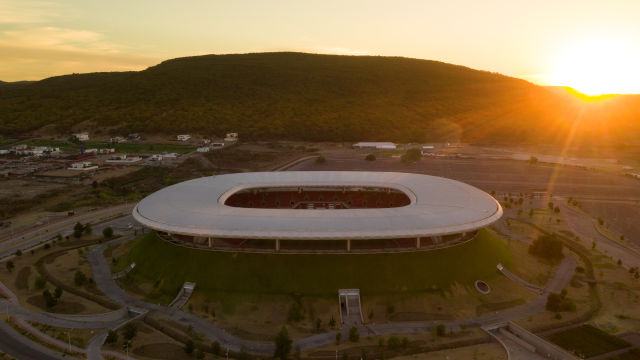
Guadalajara requires the most careful framing. The city is in Jalisco, which is under a Level 3 âreconsider travelâ advisory due to terrorism, crime, and kidnapping. That does not mean every part of Guadalajara is equally risky, and it does not mean World Cup fans should automatically cancel. It does mean travelers should pay close attention to official guidance, avoid unnecessary travel outside visitor corridors, and be especially cautious at night. Estadio Akron, renamed Guadalajara Stadium for the World Cup, is in Zapopan within the Guadalajara Metropolitan Area. This is where sticking to official transportation, hotel zones, fan areas, and well-traveled parts of the city matters.
Monterrey is in Nuevo LeĂłn, which is currently Level 2, âexercise increased caution.â This is important because Monterrey is sometimes grouped in with higher-risk northern routes, but the state advisory itself is not Level 3. The major warning for many U.S. travelers is the drive from the U.S. border to Monterrey. The State Department specifically warns travelers using highways 85/85D, 54, and 40/40D to exercise caution and avoid travel after dark because armed robberies and carjackings have occurred along those routes, even during daylight. In plain English: flying into Monterrey is a very different risk profile than driving there from the border.
Mexico isn't treating this like a normal summer travel season. The country has announced a major World Cup security operation called Plan KukulkĂĄn, with nearly 100,000 police, military, National Guard, and private security personnel expected across Mexico City, Guadalajara, and Monterrey.
The plan includes stadiums, airports, hotels, fan zones, and surrounding tourist areas. Reports also describe military and civilian vehicles, aircraft, anti-drone systems, and detection dogs as part of the operation.
For travelers, that means the security presence will likely be visible, especially around stadiums, airports, official fan zones, and major transport points. You may notice bag checks, restricted areas, road closures, police presence, and controlled access routes.
The honest read: the most heavily protected parts of the trip will probably be the official World Cup corridors. The risk rises when travelers move outside those corridors, travel late at night, take informal transportation, drive long distances, or treat the trip like a spontaneous road adventure. This is one of those times when boring travel choices are the smart travel choices.
The State Department says U.S. citizens should follow the same restrictions as U.S. government employees while traveling in Mexico. That sounds bureaucratic, but the advice is actually very practical.â¨
Hereâs the version travelers should remember:
Do not travel between cities after dark.
Do not hail taxis on the street.
Use app-based rides like Uber or Cabify, or dispatched vehicles from regulated taxi stands.
Avoid traveling alone, especially in remote areas.
Do not drive between Mexican border cities and the interior of Mexico, except in limited approved circumstances.
If you encounter a road checkpoint, comply with instructions. Do not flee, argue, or act aggressively.â¨
That last one is especially important. The advisory is very clear that ignoring checkpoint instructions can lead to many issues.
Image Source: Screenshot of U.S. State Department Webpage
The best safety advice here is boring, which is usually the best kind. Donât hike, visit viewpoints, or explore isolated areas alone at night. Keep a low profile with phones, watches, jewelry, and cash. Use ATMs inside banks, shopping centers, or hotels rather than outdoor machines. If you go out drinking, go with people you trust and leave together.
A few more practical notes:
Do not bring weapons or ammunition into Mexico. This is a serious crime and can carry severe penalties, including prison time.
Do not bring vaping devices or e-cigarettes into Mexico.
Buy World Cup tickets only through official FIFA channels or approved systems.
A U.S. passport book is required for air travel into Mexico. A passport card is not enough for flights.
Mexicoâs nationwide emergency number is 911.
American travelers should also enroll in STEP before departure, save the contact information for the U.S. Consular Agency serving the area they will be visiting, and check the State Department advisory again right before traveling. Conditions can change, and the most useful safety information is the information that is current when you actually go.
Driving in Mexico for the World Cup is not as simple as plugging the route into Google Maps and trusting the directions given. Navigation apps usually show the most direct route. They do not necessarily account for State Department restricted areas, nighttime travel warnings, cartel activity, or stretches of highway where travelers have been targeted.
That matters most for travelers thinking about driving between the U.S. border and Monterrey. The State Department specifically warns travelers using highways 85/85D, 54, and 40/40D to exercise caution and avoid travel after dark. Armed robberies and carjackings have happened along those routes, even during daylight.
The details of your trip really matter here. A World Cup traveler flying between host cities, staying in central areas, using official transportation, and avoiding late-night intercity travel is planning a very different trip from someone driving long distances from the border.
That doesnât mean travelers need to panic. It means the smartest approach is to plan the boring parts carefully: how youâre getting between cities, where youâre staying, how youâll get back at night, and whether your route lines up with the latest State Department guidance. In Mexico, as in many big-event destinations, the experience can look very different depending on how you move through the country.
For many travelers, yes, especially if they are flying into host cities, staying in well-traveled areas, using official or app-based transportation, and following State Department guidance. But Mexico has real security risks, and conditions vary widely by state. The safest approach is to treat this as a major international event with extra planning, not a casual beach weekend.
Mexico overall is currently Level 2, which means âexercise increased caution.â The advisory was reissued on May 29, 2026, with World Cup-specific guidance added.
The six Level 4 âdo not travelâ states are Colima, Guerrero, MichoacĂĄn, Sinaloa, Tamaulipas, and Zacatecas. None of those states are hosting World Cup matches.
Guadalajara is in Jalisco, which is currently Level 3, âreconsider travel.â That does not mean every part of the city is off-limits, but it does mean travelers should be more cautious. Stick to official event areas, well-traveled neighborhoods, hotel zones, and trusted transportation. Avoid late-night movement outside central visitor areas.
Monterrey is in Nuevo LeĂłn, which is currently Level 2, âexercise increased caution.â The biggest warning for many travelers is not necessarily Monterrey itself, but driving between the U.S. border and Monterrey, especially after dark.
It is not recommended for most casual visitors. The State Department advises against intercity travel after dark, and some routes pass through or near higher-risk areas. Flying between Mexico City, Guadalajara, and Monterrey is usually the simpler and safer option.
Do not hail taxis from the street. The State Department advises travelers to use app-based rides like Uber or Cabify, or dispatched vehicles from regulated taxi stands.
Yes, it is strongly recommended. Medicare, Medicaid, and many U.S. health insurance plans do not cover medical care abroad. Travel medical insurance and emergency evacuation coverage are especially important for a major-event trip.
No. A U.S. passport card can be used for certain land or sea crossings, but a passport book is required for international air travel.
Mexicoâs nationwide emergency number is 911.