We use cookies to enhance your browsing experience, serve personalized content, and analyze our traffic. By clicking "Accept All" you accept this and consent that we share this information with third parties and that your data may be processed in the USA. For more information, please read our .
You can adjust your preferences at any time. If you deny, we will use only the essential cookies and unfortunately, you will not receive any personalized content.

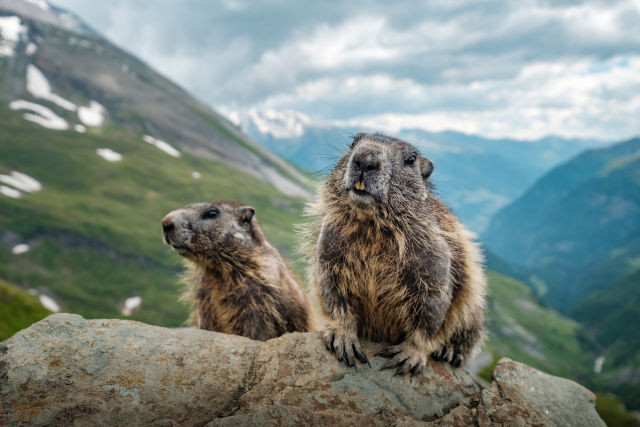
Somewhere in California's Sequoia National Park, a very large squirrel is currently sizing up your hiking boots. This isn't a joke. In the park's Mineral King Valley, yellow-bellied marmots have turned trailheads and parking lots into their personal crime scene, stealing gear, gnawing through car parts, and occasionally waking sleeping hikers with a tongue in the ear.
The National Park Service is so serious about it that entrance signs literally warn: "You are entering Marmot Country." Consider this your warning before entering a place where even your car may not make it out unscathed.
Yellow-bellied marmots are large ground squirrels that can grow to the size of a small dog
Mineral King Valley, a remote 7,800-foot-high area of Sequoia National Park, is their unofficial headquarters
Marmot season peaks from May to mid-July, when the animals swarm trailheads and parking lots
One hiker's tow bill hit more than $1,000 after a marmot disabled his car's engine
Marmots chew through radiator hoses, brake lines, and electrical wiring in search of salt and fluids
The National Park Service recommends wrapping entire vehicles in plastic tarps, including the wheel wells
Chicken wire no longer works as a defense, since marmots have reportedly learned to get around it
Some marmots have hitched rides in car engines all the way to Southern California
Marmots are ground squirrels, not the tree-climbing kind, and the yellow-bellied variety found in Sequoia and Kings Canyon National Parks has apparently decided that cute and menacing are not mutually exclusive. They're common at higher elevations throughout the parks, but Mineral King Valley is where the real chaos happens. It's remote, popular with backpackers, and full of marmots who seem to have figured out that human gear is basically a buffet.
What makes them so bold isn't hunger in the traditional sense. Rangers and researchers point to their appetite for salt, which helps explain the fascination with sweaty hiking boots, backpack straps, and anything else that's had prolonged contact with a human. Once a marmot decides your shoe smells promising, negotiations are basically over.
Some hikers have learned to take extra precautions at camp after run-ins with the local marmots. One reportedly started tying his shoes together after a marmot made off with a single boot, which was later found stashed behind a log. Another watched a marmot steal a trekking pole, then charge when someone tried to take it back. The hikers ultimately decided the marmot had won custody of the pole.
And then there’s perhaps the most unsettling encounter of all: a hiker who dozed off on a mountain pass and woke up to a marmot licking his ear. His reaction was, understandably, somewhere between horror and disbelief. You go to Sequoia expecting giant trees and sweeping mountain views, not to wake up being gently tasted by wildlife.
If gear theft feels manageable, the parking lot situation is where things get expensive. Marmots crawl underneath vehicles and into engine compartments, where they chew through plastic, radiator hoses, brake lines, and wiring while lapping up antifreeze and other fluids. One unlucky hiker paid over $1,000 to get towed down the narrow, winding mountain road after a marmot left his car undrivable.
The Park Service's current advice sounds almost absurd until you realize how serious it is: drive onto a tarp, then wrap the entire vehicle in it, wheel wells included, essentially diapering your car for the day. Chicken wire used to work as a barrier, but marmots have apparently adapted and now climb around it.
There are even reports of marmots hitching unintentional rides inside engine compartments all the way to Southern California, which is either terrifying or the most impressive commute of any rodent in America.
Tie your shoes together or keep them inside your tent rather than outside
Never leave backpacks, trekking poles, or salty gear unattended at a trailhead
Wrap your entire car in a tarp, including underneath and the wheel wells, before leaving it parked for the day
Skip the chicken wire, since marmots have reportedly figured out how to bypass it
Check under the hood before starting your car if you've parked in Mineral King Valley for more than a few hours
Keep a respectful distance if a marmot approaches, since some have charged hikers over stolen items
A vehicle wrapped in a tarp to keep curious marmots from crawling inside. Photo Courtesy: National Park Service (NPS)/Jennifer Swacina
The chaos isn't random. Marmot mischief tends to peak from May through mid-July, when the animals are most active around trailheads and parking areas, likely on the hunt for salt, food scraps, and anything else visitors have conveniently left behind. In other words, if you're heading to Sequoia or Kings Canyon in early summer, you're visiting during prime marmot season.
The behavior itself isn't exactly new, but it does seem to be getting bolder. Marmots have always lived in these parks, but with more visitors arriving each year, along with hiking boots, backpacks, cars, and gear pre-seasoned with sweat and snack crumbs, they've apparently gotten very good at figuring out where the easy wins are.
None of this means you should skip Sequoia. It just means packing a tarp along with your hiking boots and treating every marmot like it's already plotting something. The giant sequoias are still some of the most awe-inspiring sights in California, marmots or not. Just keep an eye on your gear, protect your car, and maybe don't fall asleep anywhere a marmot can reach your ear.
Marmots are drawn to the salt and fluids found in vehicles, including radiator hoses and brake lines, and they chew through wiring and plastic to get to them, sometimes disabling the car entirely.
Marmot mischief peaks from May through mid-July, when the animals are most active around trailheads and parking lots.
Mineral King Valley, a remote area of the park at around 7,800 feet elevation, is considered the epicenter of marmot-related trouble.
The National Park Service advises driving onto a tarp and wrapping the entire vehicle in it, including the wheel wells, since marmots can climb underneath and into engine compartments.
No. The Park Service no longer recommends chicken wire, since marmots have learned to maneuver around it.
They aren't typically dangerous, but some have charged hikers who tried to retrieve stolen gear, so keeping a respectful distance is smart.
Yes. Hikers have reported marmots stealing shoes, backpacks, and trekking poles, likely because of the salt residue from sweat.
Absolutely. The marmots are a quirky hazard, not a reason to skip one of California's most spectacular national parks, as long as you take basic precautions.