We use cookies to enhance your browsing experience, serve personalized content, and analyze our traffic. By clicking "Accept All" you accept this and consent that we share this information with third parties and that your data may be processed in the USA. For more information, please read our .
You can adjust your preferences at any time. If you deny, we will use only the essential cookies and unfortunately, you will not receive any personalized content.

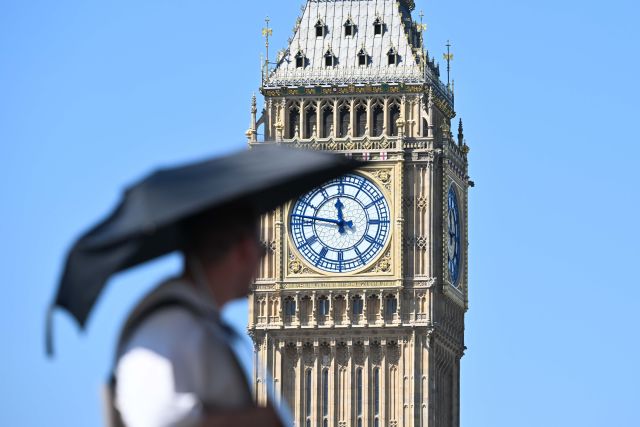
Western Europe is baking under its strongest heat dome of 2026, with temperatures running up to 29°F (16°C) above seasonal norms. The UK just recorded its hottest May day in nearly 80 years. France broke records in over 300 locations in a single day. At least seven deaths have been linked to the heat. If you have a European summer trip booked, or you're in the middle of planning one, here's what's actually happening and what it means for your trip.
Europe is experiencing record-breaking May heat, with parts of the UK, France, Spain, Portugal, Italy, and Germany seeing temperatures far above normal.
American travelers should expect summer-like conditions early, including hotter sightseeing days, crowded beaches, and possible rail or event disruptions.
Air conditioning matters, especially in older European hotels, apartments, and smaller inns where it is not always standard.
The safest travel strategy is simple: sightsee early, avoid peak afternoon heat, stay hydrated, and check local heat alerts before heading out.
This is not necessarily a reason to cancel a trip, but it is a reason to plan differently.
What's causing this is a classic heat dome: a high-pressure system sitting like a lid over Western Europe, trapping a plume of intensely hot air from North Africa and refusing to let it move. Forecasters at Severe Weather Europe are calling it the strongest heat dome so far in 2026, with temperatures running 22 to 29°F (12 to 16°C) above long-term norms.
El Niño is also likely to emerge soon in 2026, which scientists expect could influence heat patterns across Europe and North America throughout the year. El Niño is not the direct trigger here, but it is part of the broader climate backdrop.
The timing is what makes this especially striking. This kind of heat belongs in August, not the last week of May. Beaches in England that don't have lifeguards on duty yet were suddenly packed with swimmers. Mountain rivers across France became impromptu swimming spots. And the basic heatwave infrastructure travelers rely on, from shaded public spaces to air-conditioned transit and water refill points, simply was not ready yet.
The heat is widespread. Here's who's feeling it most:
United Kingdom: London hit record May heat at Kew Gardens, breaking a long-standing national May temperature record. Eight regions across southern and eastern England entered official heatwave conditions, with amber health alerts active.
France: Hundreds of weather station records fell in a single day. Paris is under a yellow heat alert. At least seven deaths have been linked to the heat, including drownings and deaths during outdoor sports events.
Spain: Peaks of 97 to 100°F (36 to 38°C) are forecast, with some areas approaching 104°F (40°C). Spain's weather agency AEMET has described conditions as extraordinarily high for this time of year.
Portugal: Temperatures are pushing 104°F (40°C) in southern regions.
Italy: Much of the country is seeing 88 to 93°F (31 to 34°C), with northern plains expected to exceed 95°F (35°C) midweek.
Germany: Temperatures up to 95°F (35°C) are forecast, with some areas already issuing water shortage warnings.
Belgium and Ireland: Both are expected to challenge or set new May temperature records before the week is out.
The heat is already creating real problems for travelers. In France, emergency services reported a jump in calls and emergency room visits over the weekend. A 28-year-old woman died of heatstroke during an outdoor fitness competition in Lyon. In England, a 13-year-old boy died after getting into trouble in a reservoir near Halifax. On France’s Atlantic coast, two drowning deaths were reported at popular beach resorts in the Gironde region, where officials warned beachgoers to be extremely careful.
The early timing of the heatwave is a big part of the problem. Many European beaches do not have lifeguards on duty yet because the summer season has not officially started. Outdoor festivals, running events, and walking tours planned for mild late-May weather are suddenly happening in full midsummer heat. Some rail services are also slowing trains because extreme temperatures can affect the tracks, a disruption travelers in the UK have seen during previous heatwaves.
If you’re visiting a major European city this week, early starts matter more than ever. Plan sightseeing before noon, take a long indoor break during the hottest part of the day, roughly 1 to 5pm, and hydrate like you would on a July trip. This is the week to treat museums, churches, galleries, long lunches, and air-conditioned hotel rooms as part of the itinerary.
No, and this is one of the biggest things American travelers need to understand before a summer trip to Europe. Air conditioning is standard in much of the United States, but it is still much less common across Europe, especially in homes, older hotels, guesthouses, and short-term rentals.
According to CNN, nearly 90% of American homes have air conditioning, compared with around 20% of homes in Europe. In some countries, the number is much lower. Only about 5% of homes in the United Kingdom have cooling systems, and in Germany, the figure is closer to 3%.
There are a few reasons for that. Many European countries historically did not need air conditioning in the same way hotter parts of the United States did. Energy costs are also higher in much of Europe, older buildings can be harder to retrofit, and some historic areas restrict visible outdoor AC units.
For travelers, the takeaway is simple: do not assume your hotel, Airbnb, guesthouse, or rental apartment has air conditioning. Check the listing carefully, look for the actual words “air conditioning,” and message the property if you are unsure. A fan is not the same thing, especially during a heatwave.
This matters most in older cities like London, Paris, Amsterdam, Berlin, Edinburgh, and many smaller historic towns, where charming buildings can become very uncomfortable during extreme heat. If you are traveling in July or August, or during an early heatwave like this one, confirmed AC is worth treating as a must-have, not a nice-to-have.
The honest answer: it could be a preview. NOAA’s Summer 2026 outlook, published May 21, flags above-average temperatures across much of the US, with the highest confidence for unusual heat in the Pacific Northwest. For Europe, this May heatwave is already being discussed as a warning sign for what could be a very hot summer travel season.
For travelers, that is not a reason to cancel. It is a reason to plan smarter. Book accommodations with confirmed air conditioning, avoid long outdoor activities during peak afternoon heat, and know where you can cool off in each city, whether that is a shaded park, museum, church, café, or air-conditioned hotel room. Coastal resorts in Portugal, Spain, and Italy, along with museum-heavy city breaks in France and Germany, are still very doable with the right adjustments.
Book hotels with confirmed air conditioning, not just a fan.
Carry a refillable water bottle, since many European cities have public fountains.
Pack light, breathable fabrics. Linen beats cotton in this kind of heat.
Plan outdoor sightseeing before 11am or after 6pm.
Use the 1 to 5pm window for museums, galleries, churches, and indoor attractions.
Only swim at supervised beaches where lifeguards are on duty.
Check daily heat alerts through the national weather service for your destination.
Europe in the heat is still Europe. It just takes a little more planning than it used to. Think slower mornings, longer lunches, more museums, and fewer ambitious midday walking routes. Build your days around shade, water, and air conditioning where you can find it, and you’ll still have the trip you came for. The goal is not to skip Europe in summer. It is to travel through it a little more thoughtfully.
Yes, it’s safe, but you should adjust your plans. Avoid midday outdoor activity between roughly 1 and 5pm, stay well hydrated, book hotels with air conditioning, and check local heat alerts for each destination.
The UK, France, Spain, Portugal, Italy, Germany, Belgium, and Ireland are all experiencing record or near-record May temperatures. Spain and Portugal are seeing some of the most extreme heat, with peaks near 100 to 104°F (38 to 40°C). That does not mean every city in Europe will be this hot all summer, but travelers should be prepared for more frequent heat spikes.
No. Air conditioning is much less common in Europe than in the United States. Nearly 90% of US homes have AC, compared with around 20% of European homes. In the UK, the figure is around 5%, and in Germany, it is closer to 3%. For travelers, that means you should always confirm whether your hotel or rental has actual air conditioning before booking.
London has recorded its hottest May temperatures on record at Kew Gardens, with readings around 95°F (35°C). That is unusually high for late May, and not typical for London, but it is a reminder that even northern European cities can get dangerously hot during a heatwave.
There is some disruption risk during extreme heat. Train speed restrictions, outdoor venue closures, and changes to events are all possible. Check with your carrier, rail operator, or venue before departure and build flexibility into your itinerary.
Early morning before 11am and evening after 6pm are your best windows. The 1 to 5pm block is usually peak heat, so major museums and indoor attractions are the smarter afternoon move.
Exercise caution. Many beaches do not have lifeguards on duty this early in the season, and riptide risks can increase when crowds surge unexpectedly. Stick to supervised beaches and follow local water safety guidance.
The heat dome is forecast to persist through at least the end of May 2026. Longer-term outlooks suggest above-average temperatures are likely to remain a concern for summer travel, though exact temperatures will vary by country, city, and week.
Yes. Pack light, breathable fabrics, a refillable water bottle, strong sun protection, and comfortable walking shoes. Temperatures will not be extreme every day or everywhere, but even cities like London and Edinburgh are not built for 95°F weather, so shade and air conditioning should not be assumed.