We use cookies to enhance your browsing experience, serve personalized content, and analyze our traffic. By clicking "Accept All" you accept this and consent that we share this information with third parties and that your data may be processed in the USA. For more information, please read our .
You can adjust your preferences at any time. If you deny, we will use only the essential cookies and unfortunately, you will not receive any personalized content.

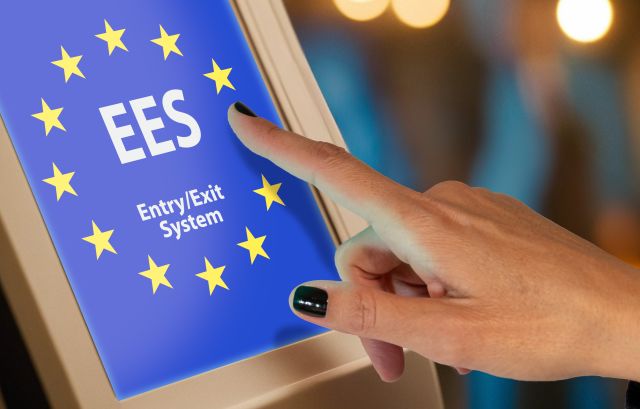
If you've got a Europe trip on the books this summer, there’s a new airport wrinkle to know about. The EU’s Entry/Exit System, or EES, became fully operational on April 10, 2026, replacing passport stamps with digital records, fingerprints, and facial scans for many non-EU travelers. In theory, it should make border checks smoother. In practice, travelers are already reporting long lines, missed connections, and confusion as the system rolls out. Peak summer travel is just getting started, so plan accordingly.
The EU’s Entry/Exit System became fully operational on April 10, 2026.
It applies to most non-EU travelers entering or leaving the Schengen Area, including Americans.
First-time registration usually includes fingerprints, a facial image, and passport details.
Delays have already been reported at some airports and border points, including Dover.
There is no pre-registration, app, or fee for EES.
ETIAS is separate and is expected to launch in the last quarter of 2026.
The EES is a new digital border control system that replaces traditional passport stamping with a secure process that records biometric data, entry dates, exit dates, and refusals of entry. In plain terms, that means fingerprints and a facial image, collected at the border when you enter or exit the Schengen Area as a non-EU national.
For Americans, the important part is simple: if you’re entering or leaving the Schengen Area for a short stay, you should expect biometric registration at the border, especially if it’s your first crossing since the system became fully operational. Every time you enter or leave the Schengen Area, the system digitally records that movement instead of relying on an old-fashioned passport stamp.
On your first crossing, expect to have your fingerprints taken, usually four fingers, and your photo captured. After that initial registration, future entries should move faster since your data is already in the system.
Here’s what the system covers at a glance:
Your passport details, name, date of birth, nationality, and gender
Fingerprints and a facial image
Entry and exit dates, tracked digitally rather than stamped
Records of any refusals of entry
Short-stay visits of up to 90 days within a 180-day period
29 European countries, including France, Spain, Italy, Germany, Portugal, Greece, the Netherlands, Austria, Belgium, and Switzerland
Notably, Ireland and Cyprus are not currently part of the EES. Travelers’ passports are still being manually stamped in those two countries, so if you’re routing through Dublin or Nicosia, that part of your trip works differently.
The rollout hasn’t exactly been seamless. Since EES began coming into wider use, the new border system has already caused headaches at several major travel points, with the biggest problems tied to longer processing times, extra biometric steps, and border staff trying to keep lines moving during busy travel periods.
The most recent example came at the Port of Dover, where extra EU border checks were suspended on May 23, 2026, after travelers faced hours-long delays during a busy UK holiday weekend. French border authorities temporarily stopped collecting the additional data required from non-EU passengers in order to speed up processing, according to the Associated Press.
Airports have been sounding the alarm, too. Reports from the rollout have included longer processing times, missed flights, and temporary pauses in biometric enrollment at some locations. The concern is simple: even a few extra minutes per passenger can turn into a very long line when summer travel volumes are already high.
The airports and airline industry groups haven’t been quiet about it, either. Major travel organizations have warned that without more flexibility, peak summer travel could bring serious disruption, especially at busy airports, ferry terminals, and border crossings.
The issue is not that the system is optional. It isn’t. The issue is that implementation can vary between countries and individual border points, which means travelers may not know exactly what to expect until they arrive.
Here’s where it gets genuinely confusing for travelers: different countries and border points may handle the rollout differently, especially during peak traffic. Greece has become one of the clearest examples of that confusion. Earlier reports suggested that British travelers might be exempt from biometric checks this summer, but Greek and EU authorities have since pushed back on the idea of a formal nationality-based exemption. Greece has said the system is active for non-EU travelers, while also allowing busy airports to pause scanners when needed to keep lines moving. That distinction matters: a temporary pause during peak traffic is not the same thing as a blanket exemption for one nationality.
For American travelers, the takeaway is straightforward: there is no confirmed exemption for US passport holders anywhere in the Schengen Area. Assume the EES applies to you. Other countries have also had to adjust. France has faced questions around how automated border gates, ferry ports, and road crossings fit into the new system. Spain, Portugal, Italy, and Greece are all being closely watched because they receive heavy summer tourism traffic and are likely to feel the pressure quickly when border processing slows down.
The short version: your experience may vary depending on which airport or border point you use and on which day you travel. Expect inconsistency. Plan accordingly.
You can’t opt out of the EES as a US traveler. It is mandatory for non-EU nationals entering the Schengen Area for short stays of up to 90 days within a 180-day period. But there are a few things you can do to make the experience less painful.
Practical steps before you go:
Check Your Passport Validity. Make sure your passport is valid for at least three months beyond your planned return-to-home date, which is a requirement for entering the Schengen Area.
Arrive Early. Not 90 minutes early. Think two to three hours for international arrivals, especially at bigger airports.
Keep Essentials In Your Carry-On. Bring phone chargers, medication, snacks, and anything else you would not want trapped in checked luggage while you wait in a long border line.
Do Not Book Tight Connections. If you’re transiting through a European hub on the way to another Schengen country, build in real buffer time.
Know That There Is No EES Pre-Registration. The biometric collection happens at the border. There is nothing to do beforehand, no app to download, and no fee to pay.
One more thing worth knowing: because these delays come from government border procedures rather than airline operations, compensation under EC 261, the EU’s passenger rights regulation, is unlikely if you miss a connection because of EES queues. The airline is generally not responsible for the border agency. That is cold comfort if you’re watching your connecting flight disappear from the departures board.
The EES is only part of the story. ETIAS, the European Travel Information and Authorization System, is expected to become operational in the last quarter of 2026. Once it launches, visa-exempt non-EU nationals from the USA, Canada, Australia, Japan, and dozens of other countries will need to apply for an ETIAS authorization before entering 30 European countries. Think of it as Europe’s version of the US ESTA system for travelers flying to the United States: an online application, a fee, and an approval that allows you to travel for a set period. For now, the EU says travelers do not need to take any action yet, but anyone planning a Europe trip in late 2026 or into 2027 should check the official ETIAS status before flying.
The practical upshot is that Europe travel is getting one more pre-trip step. Along with checking your passport validity, travel insurance, and entry rules, ETIAS may soon become part of the normal planning process for Americans heading to Europe. The EES isn’t going away either, and once the kinks are worked out, it may genuinely speed things up in the long run. But this summer is the bumpy middle chapter, and travelers who know that going in will handle it a lot better than the ones who don’t.
Yes. The EES applies to non-EU nationals, including US passport holders, entering or exiting the Schengen Area for short stays of up to 90 days within a 180-day period. Americans traveling to much of Europe should assume it applies.
The system collects fingerprints, usually four fingers, and a facial image, along with passport details such as name, date of birth, nationality, and passport number. It also records entry and exit dates, plus any refusal of entry.
The EES applies across 29 Schengen Area countries, including France, Spain, Italy, Germany, Portugal, Greece, the Netherlands, Austria, Belgium, and Switzerland. Ireland and Cyprus are not currently part of the system.
It depends on the airport, border point, and time of day. Dover saw extra EES checks temporarily suspended after long delays on May 23, 2026, and travel groups have warned that busy summer border points could see longer waits.
No. There is no EES pre-registration, app, fee, or form for travelers. Biometric data is collected at the border when you arrive or depart.
Probably not under standard EU airline compensation rules, since EES delays are caused by government border procedures rather than airline operations. Check your travel insurance policy, as some plans may cover missed connections.
ETIAS is a separate pre-travel authorization system for visa-exempt non-EU nationals. It is expected to launch in the last quarter of 2026. Once live, Americans and other eligible travelers will need to apply online before entering participating European countries.
Not formally. Greece rejected reports of a blanket exemption for British travelers. Biometric checks may be paused or scaled back during peak traffic, but that is not the same as a nationality-based exemption. There are no confirmed exemptions for US passport holders.