We use cookies to enhance your browsing experience, serve personalized content, and analyze our traffic. By clicking "Accept All" you accept this and consent that we share this information with third parties and that your data may be processed in the USA. For more information, please read our .
You can adjust your preferences at any time. If you deny, we will use only the essential cookies and unfortunately, you will not receive any personalized content.

This is the kind of national park side quest that sounds made up, but it's very real. At Big Bend National Park in West Texas, the Boquillas Crossing lets visitors step across the border into Boquillas del Carmen, a tiny village in Coahuila, Mexico, for a half-day trip that involves a rowboat, a burro, tacos, margaritas, and some of the best desert views you'll find anywhere. It's one of the most unusual experiences you can have inside a US national park, and somehow, a lot of travelers still don't know it exists. Here's what to know before you go.
The Boquillas Port of Entry is located inside Big Bend National Park and connects visitors to Boquillas del Carmen, Coahuila, Mexico.
The crossing is currently open Friday through Monday from 9 a.m. to 4 p.m. Check the NPS website before your trip, as hours can change seasonally.
US and Canadian citizens can cross with a valid passport book or passport card.
The rowboat across the Rio Grande costs about $5 round trip per person.
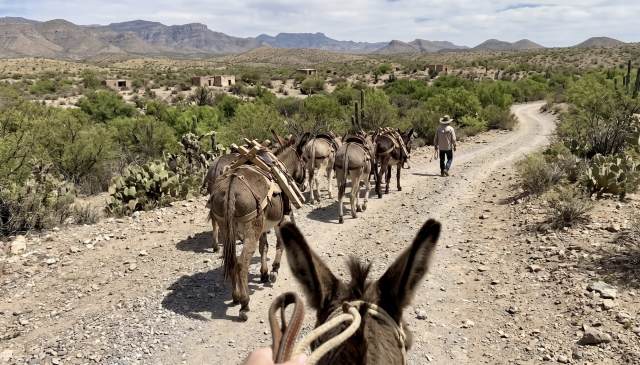
Once across the river, you can walk into town, ride a donkey or horse, or take a pickup truck.
Visitors pay a $7 entrance fee for the Maderas del Carmen Protected Area.
A realistic budget is around $60 per person for the full experience, including the boat, local fee, donkey or horse ride, lunch, drinks, and tips.
Bring cash in small bills. There's no ATM in Boquillas, and most transactions are cash-only.
You can't cross by car at this port of entry.
Big Bend is already one of the most remote and dramatic national parks in the US. This is a place of dark skies, desert mountains, river canyons, cactus, birds, hot sun, and the kind of wide-open silence that makes you feel very, very small. And then, somehow, it gets even more interesting.
Tucked inside the park is a little border crossing unlike almost anywhere else in the country. There's no big bridge, no car lane, and no line of traffic. Just a small port of entry building, a short walk to the river, and a rowboat waiting to take you across the Rio Grande.
The Boquillas Port of Entry is operated through the National Park Service and US Customs and Border Protection. On the US side, National Park Rangers help visitors with the crossing process. When you return, you'll scan your passport and speak with a customs officer through a virtual kiosk. It's probably the fastest border crossing most people will ever experience, and yes, you really do cross the Rio Grande in a rowboat.
The whole thing is surprisingly simple. Start by driving to the Boquillas Crossing parking lot near Boquillas Canyon on the eastern side of Big Bend National Park. You'll check in at the port of entry building, show your passport, and walk down the path toward the river.
From there, the "ferry" is a small rowboat. The ride takes maybe 30 seconds. When the water is low, the ferryman may even walk the boat across the shallow river. You could technically wade across in low water, but don't be that person. Pay the $5. It helps support the village, and honestly, the rowboat is part of the story.
Once you reach the Mexican side, you'll see the welcome sign for Boquillas del Carmen. From there, you can walk into town, hire a pickup truck, or ride a donkey or horse. Could you walk? Sure. It's about a half-mile, but the path is hot, dusty, and exposed, and the donkey ride is fun, memorable, and exactly the kind of thing you'll still be talking about years later.
When you get into town, visitors are required to register with Mexican immigration and pay the $7 entrance fee for the Maderas del Carmen Protected Area. You'll get a wristband as your receipt, and after that, you're free to explore.
Boquillas del Carmen is tiny. The main street takes maybe ten minutes to walk from end to end, and that's part of the charm. This isn't a polished resort town or a place packed with attractions. It's a small desert village with a couple of restaurants, a bar, local crafts, friendly people, and a view back across the Rio Grande that makes the whole trip worth it.
Most visitors stop for lunch at Jose Falcon's or Boquillas Restaurant Bar. The food is simple, fresh, and exactly what you want after a hot desert morning. On the menu, you'll usually find things like traditional vegetarian corn tacos, flour burritos, beef tacos, chicken enchiladas with green tomatillo sauce, cheese enchiladas, ground beef enchiladas with red chile sauce, quesadillas, poblano chile rellenos, and seasonal tamales with pork red sauce or chicken green sauce.
In other words: come hungry. Margaritas and cold beer are also very much part of the experience. If you're doing this right, you'll cross the river, ride the donkey, order tacos or enchiladas, drink something cold, and spend a little while looking out at one of the strangest and most beautiful lunch views in North America.
After lunch, take a walk through town. Many local residents sell handmade crafts, including wire scorpions, roadrunners, lizards, ocotillo sculptures, embroidered textiles, walking sticks, and other souvenirs. If you can, buy something. Boquillas depends heavily on visitors, and your dollars go much further here than they would on another overpriced national park souvenir.
Just make sure you buy legally inside Boquillas. The National Park Service warns visitors not to buy items left on the US side of the river, since those purchases encourage illegal crossings and the items may be seized. You should also avoid buying rocks, minerals, fossils, plants, animal products, or anything made with bones or feathers. Additionally, no food products can come north through the port of entry, including restaurant leftovers, tamales, vanilla, alcohol, and tobacco. Eat the tacos there. That's the assignment.
Finally, tip generously on your visit. The boat operators, guides, restaurant workers, and vendors are part of what makes this experience possible, and this isn't the place to nickel-and-dime people.
The Boquillas crossing is the headline, but Big Bend rewards anyone who lingers. Here are a few things worth building your trip around.
Santa Elena Canyon is the park's most dramatic geology, full stop. The Rio Grande cuts through a sheer limestone wall that rises 1,500 feet on both sides, and you can hike right into it on a short trail from the canyon mouth. Go early before the heat and the light turns flat.
The Window Trail at the Chisos Basin drops you out at a natural rock pour-off with a frame-perfect view of the desert far below. The hike in is easy; the climb back out less so. Plan accordingly.
Hot Springs Historic District on the eastern side of the park has a natural hot spring right on the riverbank — 105 degrees, free with park entry, and genuinely one of the stranger experiences in the American Southwest. You're soaking in a thermal spring while looking across the Rio Grande into Mexico. That's just Tuesday in Big Bend.
And if you're there in a dark-sky window, don't go inside at night. Big Bend is one of the least light-polluted places in the continental US, and the Milky Way is visible to the naked eye most nights. Bring a blanket and set an alarm for after midnight. You'll thank yourself.
Overall, this isn't just a quirky border crossing. Boquillas has a real story behind it. After September 11, 2001, the crossing between Big Bend and Boquillas was closed indefinitely, and that closure devastated the village. Boquillas had long depended on visitors from the national park, and without that tourist traffic, many families were forced to leave.
The crossing eventually reopened in 2013, and tourism has helped bring life back to the village. Today, Boquillas has around 200 residents, and tourism is still the principal industry. So yes, the donkey ride is fun. The margarita is great. The rowboat is a story you'll tell for years. But your visit also matters to the people who live there.
Yes, the Boquillas Port of Entry is currently open Friday through Monday from 9 a.m. to 4 p.m. Hours can change, so always check the official National Park Service page before your trip.
Yes. US and Canadian citizens need a valid passport book or passport card. This applies to every traveler, including children.
The rowboat across the Rio Grande is typically around $5 per person round trip.
Local prices can vary, but recent posted information lists pickup truck rides around $10 per person and horse or burro rides around $10 to $15 per person. Check the posted price list before committing.
Yes, you can walk. The village is about a half-mile from the river, but the path is hot, dusty, and exposed. The donkey ride is worth it.
Boquillas is generally considered safe for visitors. It's very remote, the crossing is monitored, and the village depends heavily on tourism from Big Bend.
No. This port of entry is for pedestrians only. You can't cross into Mexico by car from Big Bend National Park.
Bring your passport, cash in small bills, sunscreen, a hat, water, and enough money for the boat ride, protected-area fee, lunch, tips, and souvenirs.
Menus vary, but you can usually find dishes like tacos, burritos, enchiladas, quesadillas, chile rellenos, tamales, guacamole, margaritas, and cold beer.
When you return to the US side, you'll go back through the Boquillas Port of Entry, scan your passport, and speak with a customs officer through a virtual kiosk. The process is usually quick and straightforward.